Showing posts with label Ableism. Show all posts

Sunday, 7 March 2021

Academia Won’t Change By Itself

Written by Manya Singh 
My first year of college was my first experience with using disability accommodations.
I didn't tell anyone I used these accommodations.
Luckily, the classes I shared with friends tended to be big lecture classes, and if anyone mentioned not seeing me in the lecture room, I'd make an excuse about wearing black, or sitting in the back... and then I'd change the subject. I was so embarrassed.
My university had a policy that you had to submit accommodation letters to faculty in person, and my anxiety would bubble just under the surface as I arrived at office hours, quickly shoved the letter towards the professor, and attempted a smile before leaving without making eye contact. I knew that these professors got these letters each year, and they had already received the electronic version of mine from the coordinator, and still, the experience of having to identify myself in that moment was awful.
And then, out of nowhere, I started falling asleep.
I can remember the first time very clearly. I was in an advanced math class, as I'd qualified to skip regular algebra, and I was the youngest in that class. The teacher was great, and a legend among the students. I had always done well, especially in math, but I really wanted to impress this teacher with my attentiveness and work ethic.
But one day, I woke up to someone shaking my shoulder, and as I jerked back into reality, I caught the disapproving glance my teacher sent my way. My peers around me tried to hide their chuckles, and the student behind me told me my teacher asked her to shake me awake. I was humiliated and shocked, and I'm sure I left without giving the teacher an explanation... because I didn't have one.
For the next seven years, I would try a million things: increasing/decreasing sleep, giving up coffee, different protein powders, yoga, CrossFit, various vitamin regimes, and lots and lots of medical testing. I probably got tested for anemia, thyroid problems and diabetes every three to five months. Nothing ever worked and testing was always negative. I fell asleep almost every day, in almost every class. I was so embarrassed, especially in college. I knew that professors were thinking that I had stayed up too late partying or cramming or watching TV, when really, I had been in bed by 10:30. I sat in the back of the classroom and rarely participated, because I felt terrible.
I felt like I was inhabiting the body of someone else, a body that would not cooperate with me.
At 19, I was tested for sleep apnea, and I started treatment for that. It had been ruled out initially because I tested negative as a kid. The sleep apnea treatment helped a little, but I still fell asleep in classes. For two years, I waited for my "sleep debt" to end, but it never did. There were some other big changes in my life around this time, including having committed to coming to graduate school. I was tired of being tired, of feeling like less than a whole person, always embarrassed and anxious and hating myself. I started treatment for more severe, clinical sleep disorders.
And it worked. It's not perfect, and the effectiveness of my treatment depends on me committing to my routine, and to maintaining my health more rigorously than the average able-bodied person. My body isn't like most people's bodies, and that's frustrating, but I'm grateful that I've found effective treatment, and I'm okay with this being my reality for the rest of my life.
(It takes an average of seven years to diagnose sleep disorders, since the symptoms overlap, and tend to be ignored or dismissed. sleepfoundation.org is a good place to start if this resonates.)
The experience of my disability contributed to me feeling embarrassed and ashamed of it, but the reality is that there are many disabled people and students, with all kinds of disabilities, who feel the same way. For large segments of society, disability is bad, and we are meant to be embarrassed for being bad. Disability is not bad, but this notion being false, does not lessen the impact.
In academia, this is best represented by the statement: "Well, nobody needed accommodations when I went to school." Impostor syndrome impacts everyone, but it is different for disabled students because it interacts with, and is intensified by, the history and continuation of ableism in academia.
In college, I was co-president of the disability club on campus, and I helped a lot of students navigate accommodations. I would often get a message like, "[Insert example of not complying with official accommodation letters here], is that legal?"
I feel disgusted that there is a need to talk to students about how to negotiate accommodations, as if they are being held hostage, when they've already jumped through administrative hoops to get official accommodations. Each time I've had to do that in my own life, I have felt smaller, and I hate watching others feel that way too.
You feel like you don't belong,
like academia would be happy if you just gave up and left,
like "accommodations didn't exist back in my day" because disabled people have never
and will never be welcome in academia.
An administrator once told me that academia would improve in the next ten to fifteen years, as the people within it filtered in and out. I remember thinking: Is all we can do wait? Did we say the same thing ten years ago?
Have we always been waiting for academia to change on its own, rather than actively trying to change it?
When do we accept that hasn’t worked?
About the Author

Portrait picture of
Manya facing the camera
and smiling.
Manya Singh is a doctoral student in botany studying how drought impacts plant-soil feedback in invasive grasses. She has been active in student advocacy, with a focus on disabled students, since 2017. Follow her at manyasingheco.wordpress.com.

Sunday, 24 November 2019

The Necessary Labor of Naming and Respecting Chronic Anger

Written by Holly Clay-Buck and Sara N. Beam

Part 1 of 2

[Trigger warning: one non-specific reference to self-harm in paragraph two]

YouTuber and maker Simone Giertz does a STEM-focused series called “Shitty Robots” about building, well, shitty robots, and in a January 18, 2019, episode called “My brain tumor is back” she discusses the return of her brain tumor and what this news means for her working life. She describes feeling bummed about the uncertainty of her future and about her intellectual and physical limitations, demonstrating a degree of emotional literacy and openness that we admire. In a Reddit thread about the video, a commenter points out that “The healthy wear a crown only the sick can see.” This metaphor provides a smart reversal of the concept of invisible disabilities—the able-bodied can't see their privilege—but we recognize that it's our job to make them see it. Unfortunately, the aggravating burden of making the invisible visible falls on the people who are emotionally exhausted, sensitive, and low on spoons. This blog post seeks to do that work for our already-overburdened readers by exploring the chronic anger that comes with chronic health problems. It can be shared as needed.

I (Holly) have a degenerative spinal deformity. While surgery has corrected the worst of the symptoms (for now), I still struggle daily with chronic pain. When I was at the height of my nerve pain, I started hurting myself just for a sense of control and to distract from that particular kind of pain I was feeling all the time. What’s weird is that I didn’t feel sadness or desperation while I was doing it but rage. I was so, so, so angry about everything I couldn’t do or control, but mostly about how I wasn’t allowed to talk about how hard things were. I had to be a ‘good cripple’ with a brave face and strength and it turned into this screaming inside. Since then, I’ve felt chronic anger as a twin to my chronic pain. It’s the background noise of my life. I don’t feel it or notice it most of the time because it’s always there. However, it tints everything else around it, just like the pain does. An exciting romantic tryst is colored by my constant attention to where my neck is. A faculty meeting is an exercise in not screaming “I don’t care about your goddamned textbooks, my everything hurts!”

Academia is especially unforgiving to anger. We are people of cool logic, proof, and reason. There is no place for your tears unless it’s over a moving sonnet, and there’s even less room for your anger unless it’s directed at a major social issue. A huge problem reveals itself; lacking emotional literacy, energy, and an emotionally literate audience, how can we name and express that level of anger? Work culture defines professionalism as neutral, objective, and emotionally-beige. On the other hand, anger is coded as unprofessional, subjective, and emotionally-loud, not to mention tacky, indulgent, distracting, and inconvenient. It’s worth noting that out of fear, sadness, and anger (i.e. the ‘negative’ or undesirable emotions), anger is the one with the worst reputation. Expressing anger makes you the ‘Other’, the subaltern, the “unprofessional” side of the professional/unprofessional binary. This is the very definition of marginalization.

In a January 2019 interview, Lisa Feldman Barrett spoke of emotional literacy and the power of naming emotions. She was discussing “granular emotions.” Rather than just naming the emotion as mad, sad, scared, happy, or jealous, she encouraged listeners to dig deeper and investigate the emotion even further, down to a granular level. What kind of anger is this? What is its specific cause? How could you group or break down different kinds of anger? Part of what we are doing in this article is providing a model for naming emotions at a granular level. Our experiences and those of others illuminate for us that anger, invisibility, and disability are inextricable from each other. In order to take some kind of action rooted in compassion, we offer a strategy to name these types of anger. Part 2 of the series presents the seven types and offers a conclusion.

For the abled and unaware who wear that “crown only the sick can see,” it feels unnatural to critique the environment, the game. Abled and unaware people instead want to critique you (the unable) for not fitting the mold—you should try harder, you should not have been born this way, you are causing trouble, etc. But ACTUALLY it’s the environment that’s constructed incorrectly/unfairly AND ACTUALLY, if they (the people critiquing you) are succeeding, it’s because they are cheating— they in fact have an unrecognized advantage, even though they may be oblivious to it. Come to think of it, it’s their advantage that needs correcting. We used to think in strictly physical terms when we thought about the disabling features of an ableist society, but now we also think about them in intellectual and emotional terms. A more skillful, more feminist, more aware way of thinking and being is one which always takes accessibility into account. In a world that is not designed with you in mind—a hegemonic, binaristic culture that insists that your choices are between right/winning/male/able/neurotypical/cis/hetero and wrong/losing/female/not-able/neurodiverse/trans/not-hetero—if you are unable, you are losing and you are wrong and you are the problem. In a world that wants to be designed with people in mind—in an egalitarian, inclusive culture that encourages thought and experience beyond two limited, opposing options—if you are unable, the problem is not you. In this type of world, accessibility would be an assumed necessity and the landscape/institutions would likely evolve over time as we become more and more aware of the varieties of human experience, bodies, and perception.

A culture of accessibility is one that is informed about anger, fear and sadness. Emotional literacy is crucial.

So, what is anger, how does it affect labor, how is that effect compounded by accessibility issues, and how can we prepare ourselves and our coworkers to deal with it carefully and most productively? We offer Part 2 of this series as a resource which explores some of these issues and does some of the labor that usually falls to people with disabilities. It is a means to support self-accommodation; something that can be put in the hands of a supervisor or peer, or anyone who wears that invisible crown of health.

About the Authors

A portrait photo of Holly
Clay-Buck.
Holly Clay-Buck Grew up in small town Oklahoma. She graduated from Northeastern State University with a BA in English and the University of Tulsa with an MA in English. She is an Assistant Professor and Coordinator of Developmental Studies at Rogers State University. Her academic interests include intersectional disability advocacy, pedagogy, queer issues, and development of popular language. She is the author of How We Write: An Essentials-Only Guide to Composition and multiple articles and presentations focused on disability, collaboration, and developmental studies. Holly is involved in the LGBTQIA+ community, participates in local activism, and takes care of her friends and family.

A portrait photo of Sara N. Beam.
Sara N. Beam’s formative years were split between several small towns, first in southeastern Oklahoma and then in Fort Smith, Arkansas. She graduated from Hendrix College in 2002 with a B.A. degree in English. After moving to Tulsa, she completed the University of Tulsa (TU) English Master’s and Doctoral Degree programs in 2010. She is Applied Assistant Professor of English and Director of the Writing Program at TU. Her academic interests include teaching, written composition, disability studies, women’s and gender studies, visual rhetoric, and childhood studies. Her scholarly work includes co-editing and writing sections of the 2015 book Children’s and Young Adult Books in the College Classroom: Essays on Instructional Methods and the 2019 anthology of Oklahoma women’s personal stories, Voices from the Heartland, Volume II. In the Tulsa community, Sara is a volunteer with the Leukemia and Lymphoma Society and is a board member on the Little Blue House at TU, an interfaith voice for peace and social justice.

Monday, 22 October 2018

Pushing the Boundaries: Making the Exclusive Inclusive

Written by Amarpreet Kaur 
Having completed my BA at a very modern and inclusive institution, moving to Cambridge was an eye-opening experience. I moved to Cambridge at a time when I was not worried if I would be able to walk the next day, when being wheelchair-dependent was not an imminent possibility. However, living with a degenerative condition and having passed through that very fog just before my arrival in Cambridge mean that accessibility and inclusivity are never far from my thoughts in this city.
For those with mobility considerations, whether chronic or temporary, environmental structures can make the world of difference. Such structures often go unappreciated and are taken for granted until they cease to function / exist. Before anticipating my move to Cambridge, I certainly never truly realised how fortunate I had been in my previous academic environment. In this post, I write to critically challenge whether physical access structures to academic institutions are actually practical and inclusive, and to increase discussion on boundaries that should be pushed so that the exclusivity of higher education (HE) can become more inclusive.
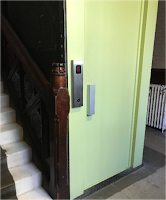
Figure 1. A Department 
Elevator. This photograph 
shows a very narrow entrance
doorway to an elevator.
The elevator is next to a
staircase with an ornate
carved wooden banister.
To illustrate my argument, I am going to start backwards, i.e. from the inside of institutional buildings. Figure 1 is of an elevator - possibly one of the most common environmental adjustments many universities have implemented in their respective buildings. The pictured elevator has purposefully been chosen as an example because of the practicalities that accompany its very presence. Whilst I do not know for certain the original purpose for the installation of this particular elevator, I am going to assume it was in response to policy / legislation surrounding accessibility1.
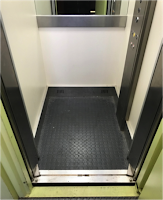
Figure 2. Inside a
Department Elevator. This
photograph shows the inside
of the elevator depicted
in Figure 1. The interior of
the elevator is very small.
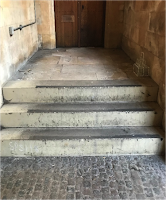
The featured elevator, however, is impractical. An adult wheelchair would struggle to fit inside (see Figure 2), and self-propelled wheelchairs would definitely not fit. Yet, fitting inside the elevator is a secondary issue - first and foremost, individuals with mobility considerations would have to find a way to actually reach the elevator. To reach the featured elevators for example, an individual would have to navigate the steps in Figure 3; there is no alternate entrance and a ramp cannot be fixed to the steps due to the steepness and available space in front of them.
Figure 3. Stairs to Departmental
Building. This photograph
shows 3 steep stone steps
heading up to wooden double
doors.

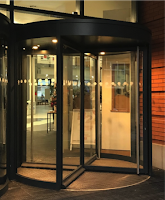
Whilst I recognise that most institutions have more practical elevators, many have less accessible entrances. At a growing number of institutions, revolving doors, as illustrated in Figure 4, are being installed for energy efficiency measures, to prevent draughts. Such doors are not inclusive of individuals with mobility considerations. Having to find and use an alternate entrance is isolating and could even be exclusionary if one does not exist.
As Hannah Gibson so aptly wrote, access to spaces sends a message that ‘certain bodies are more welcome than others … [and] that they are inferior to [more] able-bodied individuals’. With well-known governmental initiatives such as Widening Participation (WP)2, access boundaries should not need to be pushed to make HE more inclusive. In contemporary society, inclusive access should be the norm.
I have never self-identified as ‘dis’abled, mostly because I have never previously been made to feel so. However, having moved to Cambridge, I now recognise that modern structures such as accessible elevators, automatic/light doors, and relatively flat pathways, are luxuries. Needless to say, considering basic access is yet to be conquered, accessible teaching/meeting rooms and mobility-friendly accommodation are even more rare.
Figure 4. A University's revolving
doors. This photograph shows
a revolving door split into
4 narrow sections at the
entrance to a building.
I cannot escape the feeling that had I needed to rely more robustly on others, or been unable to come and go as I pleased without an entourage or timed assistance, I may have identified and felt differently. In this context, I am fortunate that my first experiences of HE were not made to be exclusive, and as a result I was enabled to reach my full potential. Now, in the words of Prof. Sara Ahmed (2006: 62), I am forced to acknowledge that ‘[w]hen bodies take up spaces they are not intended to inhabit, something other than the reproduction of the facts of the matter happens’; entrances inadvertently promote segregation, inaccessible elevators deny individuals with mobility considerations access, and thus boundaries are reinstated.
References:
Ahmed S, (2006). Queer Phenomenology: Orientations, Objects, Others. Duke University Press. USA.
Armstrong C, (2008). What you need to know about widening participation. [online] Available from: http://www.jobs.ac.uk/careers-advice/working-in-higher-education/1146/what-you-need-to-know-about-widening-participation Accessed: 27th August 2018.
Footnotes:
1. see the Equality Act 2010.
2. The aim of WP is to enable and encourage access to HE by offering opportunities to under-represented groups within the general population. Under-represented groups traditionally include which includes people with disabilities (Armstrong, 2008).
About the Author

Portrait photograph of Amarpreet
smiling into the camera with a
cityscape sunset in the background.
Amarpreet Kaur (@lioness1992) is a PhD Student at the University of Cambridge in the Department of Sociology. Amarpreet's research focuses on human germline genome editing in relation to disease and disability.

Tuesday, 26 June 2018

‘Not What I Paid For’: Ableism, Evaluations and the Academic Life

Written by Aparna Nair 
It was that time of year again.
The semester drew to an end and the university sent us enthusiastic email reminders to get students to evaluate our courses. ‘Evaluate NOW’, screamed the emails and signs posted all over campus. This semester, I caught myself instantly deleting that first notification as well as the later more urgent reminders. It was a futile gesture, since I nonetheless made sure to get my classes to fill in the evaluations. But for the first time in my academic career, I was genuinely anxious about the impending possibility of reading an evaluation report. Admittedly, 2017 was uniquely rough. A stressful year teaching seven courses was complicated by personal losses and the low hum of rising anti-immigrant sentiment, making it one of the most difficult of my life. I spent most of the year in a haze of auras, as my epilepsy had become rather recalcitrant.
And then I got these comments in my student evaluations:
I know she is sick. I know that she needs to sometimes bring her support dog into the class. I get it. But she missed classes. I know her TA took over, and that she caught up when she returned. But that is not what I paid for.
I expect more.

I don't want to hear about her illness. She gets paid to do this. WE are paying her to do this. She just needs to stop talking about it.

Even as I type the words, the shame rolls over me.
Evaluations like these raise the question of how academics who openly lay claim to disabled or chronically ill identities should respond when students demonstrate open, almost casual - certainly deliberate - ableism in evaluations. There is nothing in the faculty handbooks, endless trainings and workshops about being confronted with such blatant ableism.
I have lived with epilepsy for a very long time--I was diagnosed at the age of 11. In the deeply traditional and conservative South Asian cultures where I grew up, difference was neither encouraged nor tolerated and conformity was consistently rewarded. As a result of my illness, I experienced isolation, marginalization, derision, stigma and violence. After nearly two decades of concealment, I made a conscious decision to stop pretending that epilepsy was not a serious part of my life. Why, I thought, should I deny something that impinged on my every waking hour in ways that people rarely comprehended? Why did I need to pretend I was ‘normal’ (which my family had desperately wanted me to be) when I knew how illness marked me as different?
So, I ticked off the ‘Yes, I have a disability’ box when I applied for the position I have now, nervous and uncertain as to whether it made me just too marginal for a deeply conservative public university. I lay open claim to an epileptic identity as being part of the reason for my research agenda on disability studies and disability histories in South Asia. I design and conduct workshops on disability in university settings with a wonderful collaborator, and discuss what it means to be a chronically ill faculty member and how to ensure that our classrooms are accommodating and welcoming to disabled and chronically ill students. I publish autoethnographies on epilepsy in South India.
And every semester, my hands still shake when I tell students that I am epileptic in that first introductory session of every course. I strive for a matter-of-fact tone, and tell the classes that while this is not something I would usually share, there may be some times in the semester that my illness becomes uncontrollable and I might need to cancel a class. I then reassure them that this is factored into their syllabus and semester planning and that they will not lose out in terms of learning. Interestingly enough, my disclosure has consistently impelled students to share their own chronic illnesses or disabilities with me in private and I am very grateful for this, since it means I can make accommodations for them and design the class around their needs as well. But I have also come to realise that my initial fears about this act of public disclosure were not unwarranted.
For most of my teaching life, evaluations have always been the space where students expressed themselves anonymously and openly about their professors, without fear of reprisals. Evaluations can be funny and frivolous; trite and tough. Most of us who teach have been embarrassed at some point or the other by what seems to us sometimes unfair, occasionally inapposite ‘bon mots’—from comments on our sartorial choices (‘I loved his t-shirts’ to ‘He wore the same shoes all semester long’) to condemnations of our general affects (‘She is very opinionated! And expects you to agree with her’) to the student’s pondering what on earth we were doing in our chosen professions (‘I don’t know why he is teaching, clearly he is happier in the lab’). But evaluations can also be serious and help us adapt our teaching styles, our evaluation methods, our reading assignments and other pedagogical choices. I learnt that students liked blogging, but that they did not think that they had enough time to work on their exercises in class. I learnt that students will always have mixed opinions about group work, but that it is nonetheless useful. I learnt how the complicated courses I taught on race and empire and disability were received emotively and intellectually, and those responses were profoundly important in developing my courses in certain directions. So I had accustomed myself to opening my evaluations with the certainty that I would find useful information on my course design and assessments along with the more frivolous comments.
But I am at a loss as to how to respond to the casual ableism in my student evaluations, ableism which will become a part of every job application, every promotion and tenure application. It will be misinterpreted and decontextualised by committees and administrations and will eat into my teaching accomplishments or my research portfolio. For many people who see these comments, my epilepsy will circumscribe my abilities and skills.
How then do we respond to ableism in evaluations? I must admit, I am left only with questions. One option is to mention nothing of epilepsy at all in my classes. But it feels dishonest and just wrong.
So I can tell you how I have learnt to cope. I try to focus on the students with whom I seem to be connecting, the ones whose work is wonderful, who challenge me in class and whose presence in my classes is a true joy. And there are many of them. I have begun conducting my own evaluations in class, asking students what worked and what did not—and these are often more detailed feedback for adapting my pedagogical approach in different classes.
My methods do not always work. I sometimes feel like Sisyphus, and wonder if there is any point. I wonder if the affective (and physical) toll of being ‘out of the closet’ in academia is worth it at all.
And, in the meantime, it is more than a month since my evaluation reports were published. I still have not clicked on the link that takes me to the report.
Maybe next month? Or maybe not.
About the Author

Aparna Nair currently works as Assistant Professor in History of Science at the University of Oklahoma-Norman. She teaches on disability, race, empire, medicine and public health and her research explores colonialism and disability in British India as well as the meanings of chronic illness in modern south India. She blogs at disabilitystories.com.

Saturday, 23 September 2017

Coping strategies for disabled academics: self-acceptance and collective solidarity

Written by Marion 
Being a disabled academic is not easy. We frequently require considerably more time and effort to achieve the same as other academics and find some things which seem to be trivial for non-disabled colleagues almost impossible. We may need to achieve a lot more than others for the same recognition. We also frequently come up against a lack of understanding or even hostility when we ask for adjustments to overcome the barriers we face. It is very easy to become dispirited and to think all the difficulties are your fault and feel inadequate and incapable.
The first strategy is to recognise that you are not to blame and that academia is not particularly friendly and sometimes outright rejecting of disabled people. The social model of disability, though by no means perfect, is useful here. It puts the problem and responsibility firmly on society with its infrastructural, social and attitudinal barriers and not the individual and their impairments. It is the lack of large print books, ramps and lifts not the fact you are partially sighted or use a wheelchair that are the problem.
The second strategy is achieving change both for yourself as an individual and more widely for other disabled academics through collective action with other disabled and non-disabled people. There is strength in numbers and working with others reduces the risk of victimisation. This should include joining a trade union. UCU (the University and College Union) in the UK, which also admits (postgraduate) students. Other useful organisations (in the UK) include Disabled People Against the Cuts which is campaigning, for instance, to remove the various hurdles to disabled people getting the benefits they should be entitled to.
In most countries there is legislation about adjustments for disabled people. In the UK there is relatively strong legislation, but no sanctions for not implementing it. While the right to adjustments in the UK is limited by considerations of their ‘reasonableness’, in practice most universities and research institutes are large enough and have enough resources for this not to be an issue. It is useful to encourage your trade union branch to negotiate a policy on reasonable adjustments with your employer. This should include reasonable time limits so that adjustments are put in place quickly and central responsibility for payment to prevent individual departments or schools objecting on the grounds of cost. It should also include disability leave, for instance for medical and other appointments related to your disability, getting a guide dog, learning to use new technology or time off due to changes in your condition. For many disabled academics excessive workloads are a particular barrier and working the nominal 35-38 hour week rather than the 50-90 hour week frequently expected could make a real difference.
If you require reasonable adjustments, you should involve your trade union in negotiating them, and therefore need to be a member. Despite their legal obligations, academic employers are not always helpful and trade union support can help to change this. It is also useful to know about financial support. In the UK Access to Work has been called the best kept secret. It covers, for instance, support workers, additional equipment, adaptations to equipment, fares to work if you cannot use public transport and disability awareness training for colleagues, though the employer might be required to pay a contribution.
The third strategy is talking and exchanging experiences with other disabled academics by electronic media as well as face to face. This can be very helpful in finding out what adjustments, if any, they have and which ones they have found useful, as well as any good practice in their institutions and campaigning strategies that have and have not worked. This can help you determine what additional adjustments might be useful to you, as well as what to campaign for in your institution and how to go about it. Drawing attention to any good practice at competing institutions can often be useful. Talking to other disabled academics can be very important in breaking down isolation and feelings of inadequacy and blame and helping you realise that any problems you are experiencing have structural not personal causes. Talking in confidence to people who understand what you are going through can help you survive when things go wrong.
A fourth coping strategy is recognising your strengths. We all have them, as well of course as weaknesses. The creativity and adaptations we have developed to overcome the barriers we face are in themselves strengths and some of us may have particularly creative ways of thinking and working and/or find easy things which most non-disabled people struggle with. However, when things become difficult it is easy to forget your strengths and creativity and all the positive qualities that enabled you to overcome all the barriers, hoops and hurdles to be accepted into academia. It is easy to fall into a deep hole and feel totally inadequate. It can even be useful to write down your strengths and your achievements at a time when things are going reasonably well, so that you can refer to them in the more difficult times.
The final strategy is keeping a sense of humour, being nice to yourself and not expecting the impossible, or at least not all the time. It is frustrating to have to accept that there are things you need help with or struggle with, particularly when non-disabled people seem to sail through. At these times it is useful to consider your strengths and the times you have helped other people, as well as recognising that the difficulties are due to barriers to disabled people not your inadequacy. Keeping your ability to laugh at things, including difficulties and the pomposity or obnoxiousness of colleagues can be helpful. And the last laugh will be on us, by staying in there and being successful academics despite all the difficulties.

Sunday, 17 September 2017

Reasonable adjustments, Access to Work and disabled staff

Written by Wendy Merchant and Stephen D’Evelyn 
We are two disabled members of staff at a UK university, both involved in an ESRC funded research project called ‘Getting Things Changed’. In our research we are trying to understand the way in which social practices can disable people, and how we can build on that understanding to question and to change practices which get stuck. Our particular strand of this work focuses on the academy itself, since we know that universities are rife with problems for disabled staff and students, and we are of course implicated in those practices. In this blog post, we pose the question: is ‘Access to Work’ the solution for disabled employees? ‘Access to Work’ is the name of a UK government funded scheme which claims to support disabled people to stay in work by “providing practical and financial support” (pg 1, 2017). In theory, costs for such support are divided between the employer and the Department for Work and Pensions (DWP).
In the context of our research within universities, we have found that Access to Work is certainly not a bed of roses. The experience of disabled staff within the University navigating the scheme in order to obtain materials, resources and adaptations to buildings, is collectively identified as problematic by disabled staff at the University where we work. Neither is its availability nor the range of resources or support that it covers widely publicised to disabled staff. For instance, one of us is a woman, with various long-term conditions, working as a Research Associate on an ESRC funded project (‘Getting Things Changed’) and was unaware that Access to Work could fund a job coach to help her at work or could fund counselling for staff with mental health conditions (DWP 2017).
Disabled university staff we interviewed as part of our research described how they were left to navigate the lengthy and complex process alone, with little or no support from their employer. Instead, individual staff used the Staff Disability Forum (SDF) which disabled staff had instituted within our university as a group for peer support and collective action for positive change. This enabled them to share their difficulties and gain advice and support from each other. The SDF has become a hub where disabled staff share their experiences and give each other advice, in particular about the existence of and access to the “Access to Work” scheme. Several staff shared that they did not know what the scheme covered until another disabled staff member told them:
“…I actually got more advice and help from members of the Disabled Staff Forum. Because I didn't even know what I could apply for from some of those things, or what was relevant. What's the employer's obligation? Like, I didn't even know that. You know, what is the employer's obligation? What can I ask for from Access to Work? And so I did draw on the experience of people, other people, in order to sort of decipher that...”
As Sang (2017) suggests, such forums can, and do, act to facilitate the full integration of disabled staff into the structure of their organisation. However, by leaving disabled staff members to organise themselves and support each other to navigate through these systems themselves, there is a danger that the institution reinforces the notion of the disabled staff member as a “problem.” Although peer support is vital and at the heart of good practice, it can also generate problems, since it can reinforce the experience of only finding support from other disabled people, rather than enacting equality among persons with any variety of physical, mental health, and learning profiles. Forcing disabled staff to rely heavily if not exclusively on their own user-led groups, due to the lack of integrated support across an organisation, also reproduces and reinforces the structure of ableism—value determined by achievement—which could be said to be inherently discriminatory and disadvantageous to disabled people. A more equitable approach would recognise that all employees require a differentiated approach to their employment.
The organisation of the University into Faculties, Schools and Centres and the division of its budget further complicates the process. For example, if a disabled staff member is employed on a research contract, whose budget covers the University’s contribution to resources or adaptations? Disabled staff members reported their reliance upon having a supportive, informed and responsive line manager to support them through the process. Once the “Access to Work” grant has been made it becomes the responsibility of the individual staff member to administer their claim. This may involve managing the timesheets of support workers, submitting monthly claims and dealing with lengthy queries from the DWP regarding these claims. One disabled staff member suggested that:
“…I spend about three days a week – three full-time days a week – arranging my own travel, booking it all, researching it, filing my university claims – because everything has to be claimed through the university first – and then the Access to Work claim. Each one is a three-stage process…”
Another reported that their application was still being processed after 2 years.
These experiences raise so many questions for universities who champion policies that seek to “widen participation” and “include” disabled students and staff alike. Similar to the experience in the U.S. described by Franke et al. (2012), in UK higher education there is a discrepancy in the provision of support for disabled staff at universities compared with disabled students. However, looking at the experience of both disabled staff and disabled students within the University there is a shared sense of having to navigate organisational systems alone.
What is clear is that the University is not designed for disabled staff or students to easily fit in. This is a wider issue that is reflective of the ableist ideals of the neo-liberal society in which universities operate. Solutions instead seem to lie in the direction of firstly helping decision-makers become more aware of the value of identifying and making the most of all staff members’ potential, and secondly educating staff about the basic principles of equality which actually make for a more flexible and creative workforce. Finally, our project suggests that the most important thing is to shift models of value away from simply medical diagnoses of difference to a social model (Oliver 2013). A medical model focuses on the individual member of staff as a potential problem to be fixed, a rather prevalent attitude we have found in the university. By contrast, a social model approach would turn attention instead onto the structural issues and exclusionary practices which have become embedded and ‘naturalised’ in universities, in such a way that we often do not even perceive them. It is only by uncovering and questioning these practices that organisations may begin to tackle the power imbalances between senior and junior staff. Higher Education Institutions ought, we suggest, to be at the forefront of helping turn this vision into reality, helping transform social structures through greater understanding. To do this we need to continue the work of research, practical policy development, and improvement of organisational processes by testing policy against lived experience and revising it. In addition, we must consistently make the case for the incalculable value of the full person in all his or her variety to a society and a world facing challenges like never before.
References:
Department for Work and Pensions (2017). Access to Work. Department for Work and Pensions. Available from: https://www.gov.uk/government/publications/access-to-work-factsheet/access-to-work-factsheet-for-customers. Accessed 24/8/2017.
Franke, A.H., Berube, M.F., O’Neil, R.M., Kurland, J.E. (2012). Accommodating Faculty members who have a Disability. Report from Sub-Committee of Academic Freedom and Tenure http://www.ok-ahead.org/facultywdis.pdf
Oliver, M. (2013). The social model of disability: thirty years on. Disability & Society, 28(7): 1024-26.
Sang, K. (2017). Disability and Academic careers. Herriot Watt University: Edinburgh
About the Author

Wendy is a Research Associate in the School for Policy Studies at Bristol University and also a disability activist. Stephen is a disability activist and a scholar of Latin language and literature and Medieval Studies.

Sunday, 2 July 2017

Reflections on being awarded tenure as a woman with kids and a disability / chronic illness

Written by Holly Witteman 
We have kindly been given permission to reproduce this from Holly's blog, where you can read the full article.
There is no universal experience. In my individual experience, a good partner can make the ‘with kids’ part much easier but the ‘and a disability / chronic illness’ part remains tough. Support helps, but no one else can ever do the daily, relentless work of keeping myself alive in a world and career that isn’t always well-structured for staying healthy. The things that have worked well for me have been: (1) being flexible geographically, even at a cost to my family, (2) being extra disciplined about working hard whenever I can to balance out the times when I can’t, (3) using a calendar, not a To Do list, for planning my work, (4) writing constantly, and (5) having full drafts of grants ready 6-8 weeks ahead of deadline for rounds of pre-submission review. It also gives me hope for the future of science and research to (6) use my position to work to improve the system so that research and researchers don’t continue to be held back by barriers that have nothing to do with the quality of one’s work. This effort may or may not help me, but I am determined that it will help others. I am glad not to be alone in these efforts, and I invite anyone who isn’t already involved in such efforts to join in. Especially if you are an academic in Canada, please read this book.
In November, my application for tenure and promotion was approved. June 1, my rank went from Assistant Professor (professeure adjointe at my French-speaking institution) to Associate Professor (professeure agrégée), a bigger deal than I ever understood before I became a professor. This means that the university at which I am a professor has more of a commitment to me, and I to it. I will still be reviewed annually and need to continue to work hard, especially if I want to continue doing work that is funded by competitive grants, but this provides a higher level of job security than I had before. It means, essentially, that I cannot be fired without cause.
It has been a long road to get here, and the road doesn’t end here. My colleague Dr. Brian Zikmund-Fisher once told me, “Getting tenure is like winning a pie-eating contest in which the prize is more pie.” I have already found this to be true. But it’s a good time to take stock.
I originally started writing this for myself. I write for myself a lot. It is how I sort through my thoughts. In this case, those thoughts were about how I got here, what has gone well for me that I should keep doing, what has gone less well for me that I should stop doing, and what else I can do to help improve the system. I read something recently that really resonated with me and so I decided to share this post in case any of what I’ve written might be helpful to others, especially any others like me. (Those others will have to be people who can make it through many, many paragraphs. Scroll down towards the bottom if you just want my list of things that have helped me.)
I have two kids and have spent nearly all my life living with type 1 diabetes, a time-consuming autoimmune chronic illness classed as a disability. My kids are 10 and 5 years old. My diabetes is 34 years old. It took me quite a few of those 34 years to identify as disabled, a period of time I now recognize as being marked by my own internalized ableism that took some time to address, a growing awareness of how much I still have to learn about other forms of disability, and fear. When I say internalized ableism, put plainly, I mean that didn’t want to identify as disabled because I saw it as a negative attribute rather than just an attribute. It took me a while to deal with that. My fear comes from being afraid of having my ability to do my work impeded by ableism. I’m having a very successful career so far. I’m thrilled to be able to do research that I hope will help many people. I love doing the work I do. I love solving problems, answering research questions, and being able to support trainees in their paths toward their career goals. I don’t want that to stop for any reason, but I especially don’t want it to stop because people who have power over my career may be prejudiced.
My fears are well-founded. Academia is a competitive, reputation-based business, reputation is determined by people, people shape and are shaped by fundamentally unequal social structures, and many people also have individual biases. Individual biases may be conscious or unconscious, against groups of others or against groups of which we are members. There are many randomized controlled trials and well-analyzed observational studies in which the data support what people from underrepresented groups have long said: when you are a member of one of these groups, you have to be extra good to get an even chance. (For those who are curious, here is an excellent annotated bibliography on gender bias and other biases in academia. I also linked to a number of studies in this editorial and you may also wish to use search engines and academic databases just like you would for any other academic topic.) 
The effects of four such biases in academic research in Canada are most easily apparent in statistics for the Canada Research Chairs program, a prestigious salary award program that was required to set targets for equity after a court settlement. Canada Research Chairs pay whole salaries or portions of salaries of professors and thus, are used as recruiting tools and/or budget line adjustment tools by universities. It’s up to each university to nominate people for the chairs they have been allocated. They may nominate professors already appointed or they may recruit new professors.  
The idea of having these targets is to help ensure that known biases in academia don’t prevent qualified candidates from being nominated. These targets are achievable, not aspirational. They reflect realistic, even low, proportions within the available pool of candidates in academia. All of the targets are well under than the associated proportions in the general population. In Canada, including Indigenous nations, women represent 50% of the population, visible minorities (a Canadian term for people of colour) represent 22%, Indigenous peoples represent 4.6%, and disabled people represent about 14% of the population aged 15 years or older. For context, in the US, 19% of the population have a disability. In Australia the figure is 18%. In France, the statistic is 18%, with 80% of those being invisible. In the UK, 16% of working aged adults are disabled. Countries don’t all have the exact same definitions of disability but it’s clear that in all countries, there are a lot of people who face different kinds of barriers.
The fact that the Canada Research Chairs program isn’t achieving easy targets suggests strongly that the nominations processes as a whole are unfortunately biased, most likely in subtle ways that may be hard to identify in any single decision. This means we, as a group, are likely failing to hire and/or nominate excellent candidates. Data below are from the Canada Research Chairs’ Program Statistics, using their nomenclature. They only report single categories, no combinations. In other words, as Dr. Malinda Smith notes, there is no intersectional presentation. In statistical terms, this is like looking at main effects but not interactions, even though you know that interactions are likely to matter.
Canadian universities have had trouble with all four targets but they failed most spectacularly in nominating disabled people, so much so that the target was lowered. Among the people I know in academia in Canada who advocate for leveling the playing field for everyone, they often bring up issues of sexism, sometimes racism, sometimes colonialism, but rarely ableism. (There are also other dimensions that get less attention in academia; e.g., gender identity, sexual orientation, socio-economic background, and others.)
About the Author

Holly Witteman, PhD, is an Associate Professor in the Department of Family & Emergency Medicine, Université Laval (Laval University), Quebec City, Canada. Quebec City is unceded traditional territory of the Abenaki and Wabenaki Confederacy and the Wolastoqiyik (Maliseet) people. Dr. Witteman directs the research unit within the Faculty of Medicine’s Office of Education and Professional Development. She is also a scientist at the Research Centre of the CHU de Québec-Université Laval, at the new Institute of Primary Care Research affiliated with Laval University, and an Affiliate Investigator at the Ottawa Hospital Research Institute, Ottawa, Canada, unceded traditional Algonquin territory. With an interdisciplinary background in human factors engineering, human-computer interaction, and decision sciences, her research is about the design and evaluation of digital and other media in health decision making. She specializes in human-computer interaction in health education, risk communication and decision making, including design methods to support broad, inclusive user-centredness and patient-centeredness. Her work as Principal Investigator has been funded by the Fonds de recherche du Québec – Santé (FRQS), the Patient-Centered Outcomes Research Institute (PCORI, United States), the Canada Foundation for Innovation (CFI), and the Canadian Institutes of Health Research (CIHR).

Thursday, 3 November 2016

Wanted: Disabled Faculty Members

Written by Jay Dolmage and Stephanie Kerschbaum 
We have kindly been given permission to re-post this article from:

Advice Hiring Faculty Members Essay

When one of us -- Stephanie -- was on the job market for the first time more than 10 years ago, she agonized over whether and how to mention her disability (she is deaf) in her job materials. She knew from past experience that by not saying anything, she ran the risk of creating potential misunderstandings during interviews.
When she managed to secure more than a dozen interviews at the Modern Language Association conference, where English departments perform much of the preliminary interviewing for hires, she set to work. In addition to helping arrange for interpreters in a city where she and most of the hiring departments meeting with her had few contacts, she opened every interview by taking time to explain who the interpreter was and how committee members should interact. In addition, before MLA, she spent time ensuring that every single department had contacted the interpreter, arranged payment and logistics, and so on.
While all that work might sound almost impossible to candidates who don’t have to jump through such hoops, the fact is that, for many disabled scholars, the sorts of choices they face around disclosure and negotiating job market accommodations are deeply complex, fraught and, above all, risky. And for none of them is the process easy, uniform or predictable.
Stories like Stephanie’s -- and dilemmas around disclosing a disability or requesting accommodations while on the job market -- are endemic. Almost every academic we know with a disability has a story about accommodations gone wrong, an inaccessible interview situation or a thoughtless ableist comment.
But it doesn’t have to be this way. Many organizations such as the Modern Language Association and the National Council of Teachers of English have general guidelines about disability and the job market. The MLA’s guidelines, for instance, ask departments to make sure that interviews are held in accessible locations and to take steps to create a welcoming environment during the interview. We offer a few additional suggestions to help search committees and hiring units to avoid disability discrimination in the hiring process.
The Job Ad and Interview Invitation
The ad and interview are the first steps and, as a search committee or hiring unit, you should:
  • Examine the boilerplate text. Recently, the boilerplate text included in job ads has been changing in sometimes subtly yet often overtly ableist ways to add physical and sensory requirements that rarely have anything to do with the job itself. If you are writing a job ad, read David Perry’s work on this discriminatory language.
  • Clearly identify whom applicants should contact to request accommodations. You should also ensure that there is a confidential process by which those accommodations can be negotiated. Search chairs and committees need to inform candidates of this process in advance in the interview letter, and the contact person for negotiating accommodations should not be the chair of the search committee or a faculty member in the department. Instead, a clear channel should be identified through which a candidate can request accommodations that may be needed. A useful model here is the way disability services offices inform faculty of accommodations that need to be made in their classroom without disclosing a student’s disability. The system in place should not require a candidate to open a conversation with a search committee member or department chair that reveals personal health information or specifics about their disability.
The Responsibilities of the Hiring Committee
The hiring committee or unit should be well-versed in issues surrounding interviewing and hiring candidates with disabilities. You should:
  • Discuss how to preclude any disability discrimination in determining finalists for positions. That might mean, among other things, anticipating how candidates might move, react or perform differently at different stages of the interview process. You should also consider the significance accorded to certain kinds of performance. For example, a person who learns names quickly may make a good first impression, but that hardly is a prerequisite for success in academic work. These and other tacit social tests should not be part of the hiring discussion.
  • Consider how different interview processes might disadvantage certain candidates. Committees should work to minimize any disadvantages interviewees who have different communication, social and interpersonal styles might experience. In such discussions, the focus should be on how hiring units, search committees and job candidates might generally make the hiring process not just more accessible but also more effective. For example, if first-stage interviews have only been conducted via Skype or by telephone as accommodations, committees might consider offering all interviewees in the pool a choice as to their preferred modality. That move avoids signaling one choice as the “typical” interview setting and the other as a “special” accommodation.
  • Educate yourselves on how disability disclosure may be (illegally) compelled in conversation. Don’t ask after health conditions or comment on people’s bodies. Don’t assume either that anybody whose physical appearance does not reveal a disability is able-bodied. When possible, give candidates options and information that may make it possible for them to address issues that arise. (For example, candidates with dietary needs may be able to determine if a restaurant’s menu will suit their needs.) Engage in conversations with applicants that make clear when there is flexibility should they have any accommodation requests.
  • Be aware of common forms of disability microaggressions. People often act amazed by what a disabled person can do, assume that a disabled person needs help doing other things, ask overly personal questions, compare the candidate’s disability to other forms of disability perceived to be “good” or “bad” and so on. In the context of a job interview, such comments and questions can be especially harmful and difficult to handle.
Setting Up the Interview
  • It’s important that disabled candidates -- in fact, all candidates -- receive as much information as possible about the interview location and situation. To that end, you should:
  • Communicate as much information as possible about interview settings and procedures. That information might include how the interview will proceed and in what formats. Offer detailed information about buildings and locations where meetings may happen. Are all the buildings wheelchair accessible? Are there accessible restrooms in the building? Will interviewees be asked to move across large campus spaces to get from one meeting to another? When disabled academics don’t have full information about the spaces in which they may be giving a job talk, teaching a class or conducting a meeting, they may not know whether accommodations are, in fact, needed, or how to effectively craft or adapt their delivery and presentation.
  • Offer applicants choices. Where possible, we encourage committees to offer interviewees some choices. What technologies and resources will they have available or need to use for their job talk or teaching demonstration? What kind of food will be offered? When might they have opportunities for physical and mental breaks? Will there be an office available to them or a room where they will have privacy? Can they choose when something like a public talk will take place in the day? Can they choose where to sit if they are being interviewed or met by an entire department? These may seem like insignificant choices, but they could allow candidates to meet medical and other needs throughout the process.
Finally, we want to emphasize that the culture of academe itself contributes to disability discrimination. The current neoliberal climate for higher education puts pressure on all academics to be ever more flexible and adaptable. In such an environment, many highly qualified academics may fear that requesting any kind of accommodation might be interpreted as inability to perform, leading them to take their chances without the accommodations that have enabled their success. To ensure that faculty members can request and receive the accommodations they need, committees should openly indicate that access and accommodation are on their radar and proactively signal awareness of disability as important to diversity.
We hope our suggestions will encourage departmentwide and institutional conversations that can build awareness and promote accessible practices while avoiding disability discrimination. Our recommendations can be read, applied, circulated and expanded upon in a very practical way as we head into hiring season. Is your department hiring? Send this article to the search chair and start the conversation now.
About the Author
Jay Dolmage is associate professor of English at the University of Waterloo, and Stephanie L. Kerschbaum is associate professor of English at the University of Delaware. They are both committed to addressing forms of institutional ableism and challenging disability discrimination through their research and scholarly activism.