Showing posts with label Accessibility. Show all posts

Tuesday, 10 December 2019

The Necessary Labor of Naming and Respecting Chronic Anger

Holly Clay-Buck and Sara N. Beam 
Part 2 of 2
As we stated in Part 1 a culture of accessibility is one that is informed about anger, fear and sadness. Emotional literacy is crucial.
Below is a list of types of anger that we’ve experienced directly or heard about from our colleagues.
  1. Screaming to be heard/fighting against the expectation of invisibility
  2. The constant drone of the inconvenience and ignorance inherent to pain and disability isn’t quantifiable, so it’s not allowed to exist among the “elite.” Holly’s physical therapy ends at 10. The faculty meeting is at 12. It’s only an hour’s drive. Logically, she thinks, I can make it. Physically, I will go. Emotionally I resent it, even if it’s a necessary evil. The minutiae of disability is easily overlooked and the constant maintenance chronic illness requires is quickly forgotten when there is no crisis occurring at the present moment.
    There’s been a lot of buzz recently about chronic illness, spoons, and mental fatigue (e.g. difficulty making decisions, paying attention, understanding a process, etc.). The emotional and mental labor of chronic illness and disability are heavy and almost completely invisible. And invisible disabilities come with invisible consequences. There’s something to note about women (e.g. cis women, nonbinary people, genderfluid people, trans women and transfeminine women) being invisible in the first place. In addition, even though they are invisible, their so-called absence of input, attendance, patience, etc. is hypervisible. Essentially they are perceived as a nuisance because they aren't seen to be doing the invisible labor that is expected of them. Here we must also acknowledge KimberlĂ© Crenshaw’s concept of intersectionality: oppression caused by sexism and racism compounds the oppression caused by ableism. The stigma of invisible illness is therefore higher for people from multiple marginalized groups, for example womxn and nonbinary people of color.

  3. Loss of usefulness (strip mining) when usefulness = humanity

  4. You see it in every teacher movie: the truly committed, hopeful, usually white teacher is willing to sacrifice their time, their happiness, the family, and their health to dedicate every last ounce of their energy to their classes. We read “feel good” news stories about people working three jobs to get by, who spend 80 hours a week building businesses, and work never-ending overtime for their companies. The result is that people are expected to sacrifice their physical and mental health to the workplace.
    If admins and colleagues were trained to have realistic expectations about your boundaries and to take you at your word without judgment, then perhaps things would improve. Academia likes to think it’s better than other jobs, but it still relies on “human resources” (a term that makes our skin crawl). It’s still part of an extraction economy, as Instagram philosophers like Queer Appalachia point out to readers, as they connect the dots between strip mining for coal and strip mining bodies for labor until they wear out, sick with illness caused by the nature of the work. You’re never supposed to be angry. When an institution relies on exploitative labor practices, it’s just a matter of time until the system collapses. When you’re expected to happily be exploited, anything that gets in the way of not just doing your basic job but of being “strip mined” ruins everything. It’s very angering that everyone working these jobs and administering programs reliant on adjuncts can see how unsustainable it is, and yet we can’t do anything about it. Workers feel futile and impotent, like failures.

  5. Frustration of not being taken seriously or being minimized

  6. Frustration and irritability is caused by repeatedly having to “come out” as having an invisible illness. In one incident, one of Holly’s colleagues, who is familiar with her condition, cuffed her hard on the back of the neck during a flare. She was in terrible pain because of it, and reacted with a gasp, turning in physically, and shutting down emotionally. Her colleague did not notice for over an hour, then asked her husband if she was okay. So even when you take the risk of disclosing your condition, you are often still not seen.
    Disclosure is in fact a risk. In at-will states, it may be illegal to fire you for being disabled but it is not illegal to fire you for too many absences, not performing the emotional labor of social niceties well enough, having the wrong color hair, or any other excuse they can think of to remove the inconvenience of accommodating you. Therefore, every disclosure is an enormous act of trust, and when you are misunderstood it’s not just annoying, it’s hurtful and frightening. As Holly asks, if my colleague doesn’t even understand how to not physically hurt me, how are they able to protect my job? Just like a careless pat on the back can destroy my night out, a careless word—or the accretion of a hundred separate careless words—has the potential to destroy my career.

  7. Annoyance at microaggressions suggesting your body is an inconvenience

  8. Room temperature, fluorescent lighting, stadium or lecture hall seating—these are all environmental factors that can affect accessibility. To be sighed at, consistently overlooked, or for someone to even “jokingly” suggest that you’re a “princess” —these microaggressions suggest that our bodies are inconvenient, our needs are mere preferences, and our difficulties are faked.

  9. Rage at consistent lack of control or ability to resolve problems

  10. Case in point: two local colleges that rely on adjunct labor for a large majority of the teaching at the institution both had major problems recruiting adjuncts this semester, Spring 2019. They didn’t have enough teachers. They couldn’t get them. They assigned many more classes than typically allowed to several adjuncts, some of whom were verging on full-time status but did not see the benefits. People have figured out that being an adjunct isn’t an “in” at an institution. It’s jumping on a treadmill because they don’t want to “lose an adjunct.” And in no universe is it acceptable to be that dependent on adjuncts.
    When you think about it in this context, these hiring practices and treatment of persons with disabilities of work are obviously unsustainable because strip-mining eventually taps all of the resource. It’s very angering that everyone working these jobs and everyone administering programs reliant on adjuncts can see how unsustainable it is, and that we can’t do anything about it. Workers feel futile and impotent, like failures. A culture of accessibility is one that is informed about anger, fear and sadness. Emotional literacy is crucial.
  11. Disgust at ignorance and cruelty

  12. Most people we work with on a daily basis aren’t outright cruel, but following every semester student evaluations arrive and we have no recourse or ability to defend ourselves against the inevitable, anonymous non-academic complaints from students. For example, a professor we know shared a not uncommon anecdote about a student evaluation comment regarding her pregnancy. Every female professor has a story about a student commenting on her appearance. Professors with disabilities inevitably receive comments calling them absent, lazy, disengaged, etc., no matter what arrangements they make to avoid disrupting the flow of the class. Countless studies have shown that student evaluations are notoriously biased and prejudiced, yet administrators insist we keep them because appeasing students as ‘customers’ takes precedence over faculty mental health.
  13. Fight, flight, or freeze: physical responses to anger — biology is undeniable

  14. Even if you are uncomfortable or unsure in naming emotions, you can at the very least pay attention to what is happening inside your body, physically, in difficult situations. Let’s say your requests for accommodations have been repeatedly ignored or denied, and it’s happened again. Which of the following do you turn to?
    • Fight: use valuable spoons to tell off the ignorer/denier, to argue once more in your defense, to research research ADA law AGAIN to make a case AGAIN. Protest from within and without the institution. Build that network, gird your loins, once more into the fray.
    • Flight: leave the room, leave the building, leave the conversation, leave the profession. Anything is better than doing this again. Escape the moment.
    • Freeze: shield up, mask on, don’t move, play dead, shoot out your intestines like a sea cucumber so the predator will be satiated and move on. Brainlock.
You will probably recognize your own patterns in these descriptions. For me (Sara), option C, freeze, has often been my go-to in times of conflict. I feel anger, and I feel my negative reaction to being angry, and I don’t move. From the outside, a viewer might assume I’m peaceful. In fact I’m frequently praised by coworkers, family, and friends for being “even-tempered” and preternaturally calm. In truth, I’m sometimes dissociating from the moment because I’m stuck in a loop in my head and must write down what is happening to stay in the present (“The Devil’s Race Track,” as Samuel Clemens called it). In a culture that demands women be accommodating, I have developed a defense mechanism of shutting down: it goes something like this—this can’t be happening, this is happening, I hate this, I have no voice, I have no choice, there’s nowhere to run, think of something clever, this can’t be happening, this is happening. In response to this habit, I have learned to turn to my love of and habit of writing, and, when I can’t respond, I record. This strategy helps me comprehend what I’m hearing and feeling, creates a record of the interaction, and gives others in the room a sense of accountability because their words and actions are being documented. Writing gives me power.
While this list of seven kinds of anger makes no pretense of being all-inclusive, we do hope that it can provide at least a form of vocabulary for beginning the process of naming—and therefore normalizing—the anger we feel (and battle, and ignore, and beat ourselves up over). Heavy should be the head that wears the crown. Crowns imply power and therefore responsibility to others. By naming our unpleasant and inconvenient needs, we can shift at least some of the burden to those who can shoulder it.
About the Author

A portrait photo of Holly
Clay-Buck
Holly Clay-Buck Grew up in small town Oklahoma. She graduated from Northeastern State University with a BA in English and the University of Tulsa with an MA in English. She is an Assistant Professor and Coordinator of Developmental Studies at Rogers State University. Her academic interests include intersectional disability advocacy, pedagogy, queer issues, and development of popular language. She is the author of How We Write: An Essentials-Only Guide to Composition and multiple articles and presentations focused on disability, collaboration, and developmental studies. Holly is involved in the LGBTQIA+ community, participates in local activism, and takes care of her friends and family.

A portrait photo of Sara N. Beam
Sara N. Beam’s formative years were split between several small towns, first in southeastern Oklahoma and then in Fort Smith, Arkansas. She graduated from Hendrix College in 2002 with a B.A. degree in English. After moving to Tulsa, she completed the University of Tulsa (TU) English Master’s and Doctoral Degree programs in 2010. She is Applied Assistant Professor of English and Director of the Writing Program at TU. Her academic interests include teaching, written composition, disability studies, women’s and gender studies, visual rhetoric, and childhood studies. Her scholarly work includes co-editing and writing sections of the 2015 book Children’s and Young Adult Books in the College Classroom: Essays on Instructional Methods and the 2019 anthology of Oklahoma women’s personal stories, Voices from the Heartland, Volume II. In the Tulsa community, Sara is a volunteer with the Leukemia and Lymphoma Society and is a board member on the Little Blue House at TU, an interfaith voice for peace and social justice.

Sunday, 24 November 2019

The Necessary Labor of Naming and Respecting Chronic Anger

Written by Holly Clay-Buck and Sara N. Beam

Part 1 of 2

[Trigger warning: one non-specific reference to self-harm in paragraph two]

YouTuber and maker Simone Giertz does a STEM-focused series called “Shitty Robots” about building, well, shitty robots, and in a January 18, 2019, episode called “My brain tumor is back” she discusses the return of her brain tumor and what this news means for her working life. She describes feeling bummed about the uncertainty of her future and about her intellectual and physical limitations, demonstrating a degree of emotional literacy and openness that we admire. In a Reddit thread about the video, a commenter points out that “The healthy wear a crown only the sick can see.” This metaphor provides a smart reversal of the concept of invisible disabilities—the able-bodied can't see their privilege—but we recognize that it's our job to make them see it. Unfortunately, the aggravating burden of making the invisible visible falls on the people who are emotionally exhausted, sensitive, and low on spoons. This blog post seeks to do that work for our already-overburdened readers by exploring the chronic anger that comes with chronic health problems. It can be shared as needed.

I (Holly) have a degenerative spinal deformity. While surgery has corrected the worst of the symptoms (for now), I still struggle daily with chronic pain. When I was at the height of my nerve pain, I started hurting myself just for a sense of control and to distract from that particular kind of pain I was feeling all the time. What’s weird is that I didn’t feel sadness or desperation while I was doing it but rage. I was so, so, so angry about everything I couldn’t do or control, but mostly about how I wasn’t allowed to talk about how hard things were. I had to be a ‘good cripple’ with a brave face and strength and it turned into this screaming inside. Since then, I’ve felt chronic anger as a twin to my chronic pain. It’s the background noise of my life. I don’t feel it or notice it most of the time because it’s always there. However, it tints everything else around it, just like the pain does. An exciting romantic tryst is colored by my constant attention to where my neck is. A faculty meeting is an exercise in not screaming “I don’t care about your goddamned textbooks, my everything hurts!”

Academia is especially unforgiving to anger. We are people of cool logic, proof, and reason. There is no place for your tears unless it’s over a moving sonnet, and there’s even less room for your anger unless it’s directed at a major social issue. A huge problem reveals itself; lacking emotional literacy, energy, and an emotionally literate audience, how can we name and express that level of anger? Work culture defines professionalism as neutral, objective, and emotionally-beige. On the other hand, anger is coded as unprofessional, subjective, and emotionally-loud, not to mention tacky, indulgent, distracting, and inconvenient. It’s worth noting that out of fear, sadness, and anger (i.e. the ‘negative’ or undesirable emotions), anger is the one with the worst reputation. Expressing anger makes you the ‘Other’, the subaltern, the “unprofessional” side of the professional/unprofessional binary. This is the very definition of marginalization.

In a January 2019 interview, Lisa Feldman Barrett spoke of emotional literacy and the power of naming emotions. She was discussing “granular emotions.” Rather than just naming the emotion as mad, sad, scared, happy, or jealous, she encouraged listeners to dig deeper and investigate the emotion even further, down to a granular level. What kind of anger is this? What is its specific cause? How could you group or break down different kinds of anger? Part of what we are doing in this article is providing a model for naming emotions at a granular level. Our experiences and those of others illuminate for us that anger, invisibility, and disability are inextricable from each other. In order to take some kind of action rooted in compassion, we offer a strategy to name these types of anger. Part 2 of the series presents the seven types and offers a conclusion.

For the abled and unaware who wear that “crown only the sick can see,” it feels unnatural to critique the environment, the game. Abled and unaware people instead want to critique you (the unable) for not fitting the mold—you should try harder, you should not have been born this way, you are causing trouble, etc. But ACTUALLY it’s the environment that’s constructed incorrectly/unfairly AND ACTUALLY, if they (the people critiquing you) are succeeding, it’s because they are cheating— they in fact have an unrecognized advantage, even though they may be oblivious to it. Come to think of it, it’s their advantage that needs correcting. We used to think in strictly physical terms when we thought about the disabling features of an ableist society, but now we also think about them in intellectual and emotional terms. A more skillful, more feminist, more aware way of thinking and being is one which always takes accessibility into account. In a world that is not designed with you in mind—a hegemonic, binaristic culture that insists that your choices are between right/winning/male/able/neurotypical/cis/hetero and wrong/losing/female/not-able/neurodiverse/trans/not-hetero—if you are unable, you are losing and you are wrong and you are the problem. In a world that wants to be designed with people in mind—in an egalitarian, inclusive culture that encourages thought and experience beyond two limited, opposing options—if you are unable, the problem is not you. In this type of world, accessibility would be an assumed necessity and the landscape/institutions would likely evolve over time as we become more and more aware of the varieties of human experience, bodies, and perception.

A culture of accessibility is one that is informed about anger, fear and sadness. Emotional literacy is crucial.

So, what is anger, how does it affect labor, how is that effect compounded by accessibility issues, and how can we prepare ourselves and our coworkers to deal with it carefully and most productively? We offer Part 2 of this series as a resource which explores some of these issues and does some of the labor that usually falls to people with disabilities. It is a means to support self-accommodation; something that can be put in the hands of a supervisor or peer, or anyone who wears that invisible crown of health.

About the Authors

A portrait photo of Holly
Clay-Buck.
Holly Clay-Buck Grew up in small town Oklahoma. She graduated from Northeastern State University with a BA in English and the University of Tulsa with an MA in English. She is an Assistant Professor and Coordinator of Developmental Studies at Rogers State University. Her academic interests include intersectional disability advocacy, pedagogy, queer issues, and development of popular language. She is the author of How We Write: An Essentials-Only Guide to Composition and multiple articles and presentations focused on disability, collaboration, and developmental studies. Holly is involved in the LGBTQIA+ community, participates in local activism, and takes care of her friends and family.

A portrait photo of Sara N. Beam.
Sara N. Beam’s formative years were split between several small towns, first in southeastern Oklahoma and then in Fort Smith, Arkansas. She graduated from Hendrix College in 2002 with a B.A. degree in English. After moving to Tulsa, she completed the University of Tulsa (TU) English Master’s and Doctoral Degree programs in 2010. She is Applied Assistant Professor of English and Director of the Writing Program at TU. Her academic interests include teaching, written composition, disability studies, women’s and gender studies, visual rhetoric, and childhood studies. Her scholarly work includes co-editing and writing sections of the 2015 book Children’s and Young Adult Books in the College Classroom: Essays on Instructional Methods and the 2019 anthology of Oklahoma women’s personal stories, Voices from the Heartland, Volume II. In the Tulsa community, Sara is a volunteer with the Leukemia and Lymphoma Society and is a board member on the Little Blue House at TU, an interfaith voice for peace and social justice.

Monday, 22 October 2018

Pushing the Boundaries: Making the Exclusive Inclusive

Written by Amarpreet Kaur 
Having completed my BA at a very modern and inclusive institution, moving to Cambridge was an eye-opening experience. I moved to Cambridge at a time when I was not worried if I would be able to walk the next day, when being wheelchair-dependent was not an imminent possibility. However, living with a degenerative condition and having passed through that very fog just before my arrival in Cambridge mean that accessibility and inclusivity are never far from my thoughts in this city.
For those with mobility considerations, whether chronic or temporary, environmental structures can make the world of difference. Such structures often go unappreciated and are taken for granted until they cease to function / exist. Before anticipating my move to Cambridge, I certainly never truly realised how fortunate I had been in my previous academic environment. In this post, I write to critically challenge whether physical access structures to academic institutions are actually practical and inclusive, and to increase discussion on boundaries that should be pushed so that the exclusivity of higher education (HE) can become more inclusive.
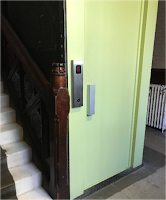
Figure 1. A Department 
Elevator. This photograph 
shows a very narrow entrance
doorway to an elevator.
The elevator is next to a
staircase with an ornate
carved wooden banister.
To illustrate my argument, I am going to start backwards, i.e. from the inside of institutional buildings. Figure 1 is of an elevator - possibly one of the most common environmental adjustments many universities have implemented in their respective buildings. The pictured elevator has purposefully been chosen as an example because of the practicalities that accompany its very presence. Whilst I do not know for certain the original purpose for the installation of this particular elevator, I am going to assume it was in response to policy / legislation surrounding accessibility1.
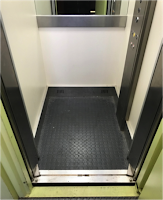
Figure 2. Inside a
Department Elevator. This
photograph shows the inside
of the elevator depicted
in Figure 1. The interior of
the elevator is very small.
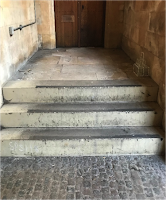
The featured elevator, however, is impractical. An adult wheelchair would struggle to fit inside (see Figure 2), and self-propelled wheelchairs would definitely not fit. Yet, fitting inside the elevator is a secondary issue - first and foremost, individuals with mobility considerations would have to find a way to actually reach the elevator. To reach the featured elevators for example, an individual would have to navigate the steps in Figure 3; there is no alternate entrance and a ramp cannot be fixed to the steps due to the steepness and available space in front of them.
Figure 3. Stairs to Departmental
Building. This photograph
shows 3 steep stone steps
heading up to wooden double
doors.

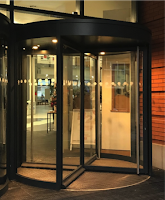
Whilst I recognise that most institutions have more practical elevators, many have less accessible entrances. At a growing number of institutions, revolving doors, as illustrated in Figure 4, are being installed for energy efficiency measures, to prevent draughts. Such doors are not inclusive of individuals with mobility considerations. Having to find and use an alternate entrance is isolating and could even be exclusionary if one does not exist.
As Hannah Gibson so aptly wrote, access to spaces sends a message that ‘certain bodies are more welcome than others … [and] that they are inferior to [more] able-bodied individuals’. With well-known governmental initiatives such as Widening Participation (WP)2, access boundaries should not need to be pushed to make HE more inclusive. In contemporary society, inclusive access should be the norm.
I have never self-identified as ‘dis’abled, mostly because I have never previously been made to feel so. However, having moved to Cambridge, I now recognise that modern structures such as accessible elevators, automatic/light doors, and relatively flat pathways, are luxuries. Needless to say, considering basic access is yet to be conquered, accessible teaching/meeting rooms and mobility-friendly accommodation are even more rare.
Figure 4. A University's revolving
doors. This photograph shows
a revolving door split into
4 narrow sections at the
entrance to a building.
I cannot escape the feeling that had I needed to rely more robustly on others, or been unable to come and go as I pleased without an entourage or timed assistance, I may have identified and felt differently. In this context, I am fortunate that my first experiences of HE were not made to be exclusive, and as a result I was enabled to reach my full potential. Now, in the words of Prof. Sara Ahmed (2006: 62), I am forced to acknowledge that ‘[w]hen bodies take up spaces they are not intended to inhabit, something other than the reproduction of the facts of the matter happens’; entrances inadvertently promote segregation, inaccessible elevators deny individuals with mobility considerations access, and thus boundaries are reinstated.
References:
Ahmed S, (2006). Queer Phenomenology: Orientations, Objects, Others. Duke University Press. USA.
Armstrong C, (2008). What you need to know about widening participation. [online] Available from: http://www.jobs.ac.uk/careers-advice/working-in-higher-education/1146/what-you-need-to-know-about-widening-participation Accessed: 27th August 2018.
Footnotes:
1. see the Equality Act 2010.
2. The aim of WP is to enable and encourage access to HE by offering opportunities to under-represented groups within the general population. Under-represented groups traditionally include which includes people with disabilities (Armstrong, 2008).
About the Author

Portrait photograph of Amarpreet
smiling into the camera with a
cityscape sunset in the background.
Amarpreet Kaur (@lioness1992) is a PhD Student at the University of Cambridge in the Department of Sociology. Amarpreet's research focuses on human germline genome editing in relation to disease and disability.

Sunday, 18 March 2018

Disableism in Academia

Written by Sonali Shah 
Disablism in academia has struck me down twice since I got my PhD and started on the academic career ladder. I am currently in the middle of the second bout, which I will go into later. First, let’s rewind my career trajectory to 2010, when my Nuffield Career Development fellowship in Disability Studies ended. Although I had been at my institution for three years, earned a pretty positive reputation in disability studies and been returned to REF 2008, no other opportunity was found for me and I became unemployed. The fact that I was in the middle of writing my third research monograph (co-authored by a non-disabled prof in Disability Studies – as they all seem to be) earned me an associate position with access to library resources and very minor bits of paid work. During this unpaid break of 18 months, the research monograph was published and I submitted an Economic and Social Research Council (ESRC) research grant proposal and did some voluntary work at the World Health Organization (WHO). Just before my internship at the WHO, I secured a 3 year university research fellowship within the same institution, which would start when I returned. Before my interview, I was awarded the ESRC grant I had applied for, which was obviously very attractive to the University and got me the job. While in that role, I was managing large grants and other staff, convening and teaching Masters courses and supervising undergraduate and Masters students.
So, 2 years, 3 books and 10 articles later, I wanted a promotion like my non-disabled colleagues who, while I was unemployed for 18 months, had zoomed past me on the academic career ladder. I thought it would be a good opportunity to ask for promotion as I was already working at a Grade 8 level doing the same work as other Grade 8 staff and yet I was still Grade 7. However, I was discouraged from applying for promotion by my line manager. A new post came up in the Centre for a Grade 9 Lecturer. My line manager said I should apply. I got an interview. I was not successful. Later I learned that the staff on the panel and in the Centre already knew I would not be successful, even before the interview.
After two years in this research post in Disability Studies, I applied for a Lord Kelvin Adams Smith (LKAS) fellowship with a research centre in Scotland. This was a four-year fellowship with promises of a permanent post if all objectives were met - teaching, publications and research. Again, I had a research grant under my belt. Again, I got the job and took the grant with me. My previous institution was a little taken aback when I left and took most of the grant with me, but my new employer agreed to employ me at Grade 8. On a personal level, this decision to take a post in Scotland meant finding an accessible flat in Scotland, finding personal assistants in Scotland, and commuting from my home in England to Scotland and vice versa every week. The question of moving to Scotland was not an option at that stage as my husband had a permanent job in England. So a commuter I became, with two cars, two beds, two sets of Personal Assistants, two lives, and many, many air miles, but that is another story. I wanted this job, a chance to shine and to have a permanent contract; or so I thought! I was one of 6 LKAS fellows in the faculty. I was one of three women, but the only BME woman, and the only BME disabled woman.
Fast forward to year four of the fellowship; feeling positive, with 4 more publications, 3 years convening and teaching an MSc course with very positive student feedback and a book contract, I thought I had built enough of a reputation to progress to a permanent post like my 5 fellow LKAS colleagues. While I had not managed to secure any large funding grants, I had submitted several large grant applications with colleagues. In most cases we had passed the first stages. This was not unlike the other LKAS fellows. However, unlike the 5 other LKAS fellows, I was facing multiple barriers to do what I needed to do and get where I needed to go. For instance, the course I taught was on the 9th floor of a tower block and when there was a fire alarm in week 5 during the class, no one came to check I could get out. I couldn't so I stayed there! Another difference was when I was invited to a single candidate interview to progress to a lectureship post, the decision had already been made to make me redundant. That was the second swipe, knocking me off the career ladder once more.
Although my new book 'Global Perspectives of Disability Violence and Gender: A Life-course and Human Rights Approach' will be published by Routledge in May, and I do not have the stress of academic life, I get angry about having my upward career trajectory constrained every 4/5 years until I reach another turning point. It's frustrating because my personal agency seems to be overshadowed by disabling structures and lack of enabling policies for disabled staff. I am not unique here, but this means that the field of Disability Studies is mainly run by non-disabled academics.
About the Author

Dr Sonali Shah is committed to research, scholarship and teaching that matters and makes a positive impact to the global challenges of equality, inclusion, health and social well-being of disabled people across intersectional identities and the life course. She graduated with a PhD in Occupational Psychology and Disability at Loughborough University in 2002. Her forthcoming co-edited collection, Disability, Gender and Violence (Shah and Bradbury-Jones. 2018) brings together academics, practitioner and survivor voices from across the world to discuss experience of violence, barriers to disclosure and support for disabled women from childhood to older life.

Sunday, 7 January 2018

Access denied: the dark side of prestige

Written by Hannah Gibson 
‘In order for others to [be accommodated], who as beings have a different set of requirements, they would have to push for a modification of the environment. Some have to push to be accommodated. Given how able-bodied privilege comes to structure a world (both a physical and social world) then people will disabilities have to push to have their own requirements met.’ (Sara Ahmed)
Spaces. Each one requires a different physical and intellectual attentiveness. Perhaps you have never thought about how much energy it will take to get from one space to another, how your body responds when faced with slight inclines or uneven paths. The lighting of a space, whether there is a clear trajectory from the doorway to a seat. The space itself, how it seems inoffensive yet from the outside looking in, certain spaces are porous, where the walls, floor, ceiling have come to assume a certain type of body will fill that space.
Some weeks ago, there was a public engagement session that I wanted to attend in the Department of Sociology at The University of Cambridge. Around the same week, I was looking forward to a lecture on intersectionality by Sara Ahmed. Both events were scheduled to take place in the same seminar room, but I could not go because on those days, it was too difficult to walk up or down stairs. I live with complex and rare multi-system invisible illnesses, and the challenges I face, particularly within society and academia are what disable me (thus, I identify myself as a disabled person). Living with invisible conditions means that I look physically capable and ‘healthy.’ In this blog post, I want to create (or contribute to) a dialogue about the salient and ignored issues related to being disabled (both visibly and invisibly) within an academic institution, access (or lack of) to spaces, and what messages this reproduces.
I feel honoured to be a Visiting Scholar at Reprosoc* in the Sociology Department at The University of Cambridge. My family are proud. It is a privilege. Speaking out in any way that isn’t positive about a prestigious institution feels wrong – I should be thankful, right? A girl who didn’t attend high school and fought her way through her undergraduate and graduate school now sits at a desk at one of the world’s most renowned universities, and I am raising questions that may make people uncomfortable. But, as Sara Ahmed would say, you have to push against the tide and push against others walking in the opposite direction to be accommodated. As for the notion of privilege and prestige, they work to silence me, trying to erase my discomfort before I begin to give shape to the words and dare to speak them. However my positionality as a temporary visitor is perhaps what gives me the confidence to be honest. My goal is simple: to raise awareness so that long-term, disabled students, staff, and other visiting scholars have access to access any room or area that able-bodied people have.
Although there are archaic and small elevators (note the word ‘small’ as you read on) in some buildings, there are a number of areas that have none. The first time I was presented with stairs to the aforementioned seminar room, I walked up them. The next few times I couldn’t due to pain and fatigue. I do a lot physically with my limitations already, so forcing my body to ascend stairs and endure pain as I sit through a lecture or seminar is not productive. I have found that having incredibly supportive colleagues and mentors is not enough. They cannot erase the stairs that must be climbed or make the paved streets straighter. It is illogical that given how inaccessible rooms and buildings are in a country that has so many laws about being inclusive (see The Equality Act 2010).
At an individual level, not being able to participate fully in the both the academic and social aspects at an institution is isolating and pushes me, as a disabled person, further into the periphery of university life. This is not an unfamiliar feeling: to sit and give people my attention when the pain sears through my body, being too exhausted but wanting to attend something important, swallowing medicine to get through the day. The difference between this ‘normal’ and my current locale is that the physical barriers become much less about my in/abilities and more about the spaces that I am barred from, where the hurdles are concrete steps, uneven pavements and the way this has been allowed to continue into 2017. It is in the spaces found outside of the rooms beyond my physical reach that I stand (often alone) and feel defeated. It is infuriating but also incredibly sad. Why does an institution that has so much to offer is so exclusionary?
Without extra challenges, as a sick graduate student, it’s a David and Goliath battle, a weak body pitted against a myriad of challenges that form one giant monster. Pain, fatigue, deadlines, nausea, weak immune system, dysfunctional autonomic system, rest to fit in around all of this, and not forgetting to eat. It’s a constant roundabout of things to do, to cope with, and to juggle. Add on the normal pressures of completing a PhD (and particularly in anthropology where your body is your main tool as you undertake intense fieldwork – data collection – to understand the lives of your participants), I have a challenging schedule. Having environmental barriers further debilitates and narrows one’s options to participate in the very world in which one continually fights to carve out a space for oneself. Sadly, to be at Cambridge has meant more about adapting to an able-bodied world and less about engaging with my research.
Aptly put by this blogger, ‘when having to constantly seek out whether there is building access [to events], you’re having to foreground yourself as someone disabled before you get to present yourself as someone who is a badass researcher. Psychologically, achieving the inverse of this is hard enough with a temperamental body. Additional reasons to reinforce this lexical ordering of identity just aren’t welcome, especially when they’re avoidable if the access information was just made public.’ Indeed, this is a problem for many disabled people. We are in 2017, a time where one would hope accessibility issues would be minor. I could spend my time here unseen. If buildings were more accessible, I would not have to voice the concerns here. However, I know that if I were here full-time I would be reluctant to step forward. This makes it more of an imperative that I advocate and highlight the need for the university to be more inclusive.
The life of an academic (graduate, post-doc, research associate, lecturer) demands nothing but commitment and hours of input in order to survive within the academic setting. If healthy individuals feel the pressure, how are disabled people to speak of our struggles without inviting a spotlight that questions whether we deserve a place at the table to begin with? And why are people generally uneasy when the topic of disability is brought up? One thought: the systemic inequalities and oppression disabled people experience within institutions highlights how uncomfortable able-bodied people are with the concept of (any kind of) vulnerability. Disability studies have shown that one of the reasons able bodied people struggle to engage in dialogue about this topic is because anyone could become disabled and require help. Further, talk of limitations muddies the image of climbing the academic ladder or striving to be the best you. Thus invisible (and literal in the sense of lack of access) boundaries are created between the ‘able’ and the ‘dis-abled,’ and we become (alongside other oppressed minority groups) the Other (Ahmed, 2017 also writes to this).
At a wider level, a disabled person cannot study sociology at The University of Cambridge. There are specific spaces that it is not possible for disabled students to access. I’m here to ask, what message does this reproduce? In the first instance, certain bodies are more welcome than others. Yes there is a disability resource centre at the University, which I have no doubt provides help to those needing it, but I have to ask: where are all the disabled people? According to a study done in 2015, 1 in 10 students in tertiary education identify as disabled. Why am I seeing and feeling a disregard for those who inhabit this world differently to how able bodied persons might? Discarded before they are even acknowledged, the very smallness of the space that we are being given (if that) feels like a cursory attempt at inclusivity that fails. And the lack of access that I seek to this space but often cannot inhabit tells me something. To block, to restrict access, to continue to oppress, to ignore, speaks of what value is given to disabled people. And in turn it is reproducing the message that they are inferior to able-bodied individuals. To be a disabled person, it is always in proximity to the ‘abled’. Indeed, a disabled body creates the illusion that the able-bodied is the superior one.
Back to spaces. When I’m well enough, I walk around some of the streets close to my office. It is an incredibly beautiful town. Yet on bad health days, I have not felt like I belong. However, encouraged by my colleagues I have found space (for example in my office) that is inclusive, welcoming and non-judgemental. However beyond this, rooms can turn into spaces to fear, and ultimately avoid. Each space resides in beautiful buildings, but I have become smaller and voiceless. Until now. A colleague said something that struck a chord with me recently: don’t think you aren’t worthy of being here. Push the boundaries. Push to make them more flexible. And she is right. Waiting for others to realise anything can be futile. The best way I know how to push against the tide is through writing, experimenting and challenging inexcusable discrimination with the my own truth in order to challenge the norm so that those placed outside of it are not ignored.
*To note, this is not about my colleagues at Reprosoc, or anyone else that I have the pleasure to know in the Sociology Department. They make life a bit easier.
About the Author

Hannah is a PhD Candidate at Victoria University of Wellington and a Visiting Scholar at The University of Cambridge, UK.

Saturday, 23 September 2017

Coping strategies for disabled academics: self-acceptance and collective solidarity

Written by Marion 
Being a disabled academic is not easy. We frequently require considerably more time and effort to achieve the same as other academics and find some things which seem to be trivial for non-disabled colleagues almost impossible. We may need to achieve a lot more than others for the same recognition. We also frequently come up against a lack of understanding or even hostility when we ask for adjustments to overcome the barriers we face. It is very easy to become dispirited and to think all the difficulties are your fault and feel inadequate and incapable.
The first strategy is to recognise that you are not to blame and that academia is not particularly friendly and sometimes outright rejecting of disabled people. The social model of disability, though by no means perfect, is useful here. It puts the problem and responsibility firmly on society with its infrastructural, social and attitudinal barriers and not the individual and their impairments. It is the lack of large print books, ramps and lifts not the fact you are partially sighted or use a wheelchair that are the problem.
The second strategy is achieving change both for yourself as an individual and more widely for other disabled academics through collective action with other disabled and non-disabled people. There is strength in numbers and working with others reduces the risk of victimisation. This should include joining a trade union. UCU (the University and College Union) in the UK, which also admits (postgraduate) students. Other useful organisations (in the UK) include Disabled People Against the Cuts which is campaigning, for instance, to remove the various hurdles to disabled people getting the benefits they should be entitled to.
In most countries there is legislation about adjustments for disabled people. In the UK there is relatively strong legislation, but no sanctions for not implementing it. While the right to adjustments in the UK is limited by considerations of their ‘reasonableness’, in practice most universities and research institutes are large enough and have enough resources for this not to be an issue. It is useful to encourage your trade union branch to negotiate a policy on reasonable adjustments with your employer. This should include reasonable time limits so that adjustments are put in place quickly and central responsibility for payment to prevent individual departments or schools objecting on the grounds of cost. It should also include disability leave, for instance for medical and other appointments related to your disability, getting a guide dog, learning to use new technology or time off due to changes in your condition. For many disabled academics excessive workloads are a particular barrier and working the nominal 35-38 hour week rather than the 50-90 hour week frequently expected could make a real difference.
If you require reasonable adjustments, you should involve your trade union in negotiating them, and therefore need to be a member. Despite their legal obligations, academic employers are not always helpful and trade union support can help to change this. It is also useful to know about financial support. In the UK Access to Work has been called the best kept secret. It covers, for instance, support workers, additional equipment, adaptations to equipment, fares to work if you cannot use public transport and disability awareness training for colleagues, though the employer might be required to pay a contribution.
The third strategy is talking and exchanging experiences with other disabled academics by electronic media as well as face to face. This can be very helpful in finding out what adjustments, if any, they have and which ones they have found useful, as well as any good practice in their institutions and campaigning strategies that have and have not worked. This can help you determine what additional adjustments might be useful to you, as well as what to campaign for in your institution and how to go about it. Drawing attention to any good practice at competing institutions can often be useful. Talking to other disabled academics can be very important in breaking down isolation and feelings of inadequacy and blame and helping you realise that any problems you are experiencing have structural not personal causes. Talking in confidence to people who understand what you are going through can help you survive when things go wrong.
A fourth coping strategy is recognising your strengths. We all have them, as well of course as weaknesses. The creativity and adaptations we have developed to overcome the barriers we face are in themselves strengths and some of us may have particularly creative ways of thinking and working and/or find easy things which most non-disabled people struggle with. However, when things become difficult it is easy to forget your strengths and creativity and all the positive qualities that enabled you to overcome all the barriers, hoops and hurdles to be accepted into academia. It is easy to fall into a deep hole and feel totally inadequate. It can even be useful to write down your strengths and your achievements at a time when things are going reasonably well, so that you can refer to them in the more difficult times.
The final strategy is keeping a sense of humour, being nice to yourself and not expecting the impossible, or at least not all the time. It is frustrating to have to accept that there are things you need help with or struggle with, particularly when non-disabled people seem to sail through. At these times it is useful to consider your strengths and the times you have helped other people, as well as recognising that the difficulties are due to barriers to disabled people not your inadequacy. Keeping your ability to laugh at things, including difficulties and the pomposity or obnoxiousness of colleagues can be helpful. And the last laugh will be on us, by staying in there and being successful academics despite all the difficulties.

Sunday, 17 September 2017

Reasonable adjustments, Access to Work and disabled staff

Written by Wendy Merchant and Stephen D’Evelyn 
We are two disabled members of staff at a UK university, both involved in an ESRC funded research project called ‘Getting Things Changed’. In our research we are trying to understand the way in which social practices can disable people, and how we can build on that understanding to question and to change practices which get stuck. Our particular strand of this work focuses on the academy itself, since we know that universities are rife with problems for disabled staff and students, and we are of course implicated in those practices. In this blog post, we pose the question: is ‘Access to Work’ the solution for disabled employees? ‘Access to Work’ is the name of a UK government funded scheme which claims to support disabled people to stay in work by “providing practical and financial support” (pg 1, 2017). In theory, costs for such support are divided between the employer and the Department for Work and Pensions (DWP).
In the context of our research within universities, we have found that Access to Work is certainly not a bed of roses. The experience of disabled staff within the University navigating the scheme in order to obtain materials, resources and adaptations to buildings, is collectively identified as problematic by disabled staff at the University where we work. Neither is its availability nor the range of resources or support that it covers widely publicised to disabled staff. For instance, one of us is a woman, with various long-term conditions, working as a Research Associate on an ESRC funded project (‘Getting Things Changed’) and was unaware that Access to Work could fund a job coach to help her at work or could fund counselling for staff with mental health conditions (DWP 2017).
Disabled university staff we interviewed as part of our research described how they were left to navigate the lengthy and complex process alone, with little or no support from their employer. Instead, individual staff used the Staff Disability Forum (SDF) which disabled staff had instituted within our university as a group for peer support and collective action for positive change. This enabled them to share their difficulties and gain advice and support from each other. The SDF has become a hub where disabled staff share their experiences and give each other advice, in particular about the existence of and access to the “Access to Work” scheme. Several staff shared that they did not know what the scheme covered until another disabled staff member told them:
“…I actually got more advice and help from members of the Disabled Staff Forum. Because I didn't even know what I could apply for from some of those things, or what was relevant. What's the employer's obligation? Like, I didn't even know that. You know, what is the employer's obligation? What can I ask for from Access to Work? And so I did draw on the experience of people, other people, in order to sort of decipher that...”
As Sang (2017) suggests, such forums can, and do, act to facilitate the full integration of disabled staff into the structure of their organisation. However, by leaving disabled staff members to organise themselves and support each other to navigate through these systems themselves, there is a danger that the institution reinforces the notion of the disabled staff member as a “problem.” Although peer support is vital and at the heart of good practice, it can also generate problems, since it can reinforce the experience of only finding support from other disabled people, rather than enacting equality among persons with any variety of physical, mental health, and learning profiles. Forcing disabled staff to rely heavily if not exclusively on their own user-led groups, due to the lack of integrated support across an organisation, also reproduces and reinforces the structure of ableism—value determined by achievement—which could be said to be inherently discriminatory and disadvantageous to disabled people. A more equitable approach would recognise that all employees require a differentiated approach to their employment.
The organisation of the University into Faculties, Schools and Centres and the division of its budget further complicates the process. For example, if a disabled staff member is employed on a research contract, whose budget covers the University’s contribution to resources or adaptations? Disabled staff members reported their reliance upon having a supportive, informed and responsive line manager to support them through the process. Once the “Access to Work” grant has been made it becomes the responsibility of the individual staff member to administer their claim. This may involve managing the timesheets of support workers, submitting monthly claims and dealing with lengthy queries from the DWP regarding these claims. One disabled staff member suggested that:
“…I spend about three days a week – three full-time days a week – arranging my own travel, booking it all, researching it, filing my university claims – because everything has to be claimed through the university first – and then the Access to Work claim. Each one is a three-stage process…”
Another reported that their application was still being processed after 2 years.
These experiences raise so many questions for universities who champion policies that seek to “widen participation” and “include” disabled students and staff alike. Similar to the experience in the U.S. described by Franke et al. (2012), in UK higher education there is a discrepancy in the provision of support for disabled staff at universities compared with disabled students. However, looking at the experience of both disabled staff and disabled students within the University there is a shared sense of having to navigate organisational systems alone.
What is clear is that the University is not designed for disabled staff or students to easily fit in. This is a wider issue that is reflective of the ableist ideals of the neo-liberal society in which universities operate. Solutions instead seem to lie in the direction of firstly helping decision-makers become more aware of the value of identifying and making the most of all staff members’ potential, and secondly educating staff about the basic principles of equality which actually make for a more flexible and creative workforce. Finally, our project suggests that the most important thing is to shift models of value away from simply medical diagnoses of difference to a social model (Oliver 2013). A medical model focuses on the individual member of staff as a potential problem to be fixed, a rather prevalent attitude we have found in the university. By contrast, a social model approach would turn attention instead onto the structural issues and exclusionary practices which have become embedded and ‘naturalised’ in universities, in such a way that we often do not even perceive them. It is only by uncovering and questioning these practices that organisations may begin to tackle the power imbalances between senior and junior staff. Higher Education Institutions ought, we suggest, to be at the forefront of helping turn this vision into reality, helping transform social structures through greater understanding. To do this we need to continue the work of research, practical policy development, and improvement of organisational processes by testing policy against lived experience and revising it. In addition, we must consistently make the case for the incalculable value of the full person in all his or her variety to a society and a world facing challenges like never before.
References:
Department for Work and Pensions (2017). Access to Work. Department for Work and Pensions. Available from: https://www.gov.uk/government/publications/access-to-work-factsheet/access-to-work-factsheet-for-customers. Accessed 24/8/2017.
Franke, A.H., Berube, M.F., O’Neil, R.M., Kurland, J.E. (2012). Accommodating Faculty members who have a Disability. Report from Sub-Committee of Academic Freedom and Tenure http://www.ok-ahead.org/facultywdis.pdf
Oliver, M. (2013). The social model of disability: thirty years on. Disability & Society, 28(7): 1024-26.
Sang, K. (2017). Disability and Academic careers. Herriot Watt University: Edinburgh
About the Author

Wendy is a Research Associate in the School for Policy Studies at Bristol University and also a disability activist. Stephen is a disability activist and a scholar of Latin language and literature and Medieval Studies.

Saturday, 22 July 2017

Improving access on campus

Written by Katherine Deane 
I work at the University of East Anglia (UEA) in Norwich, UK. Based in the School of Health Sciences, I’m a Senior Lecturer in Research, working with people to improve their management of long-term conditions. I’m also a wheelchair user.
In the 1960s UEA’s campus was designed with the intent of creating a sense of community. Unfortunately, back in the ‘60s, people with disabilities were not considered to be a usual part of the university’s community. So our campus was built without implementing the principles of universal design and included inherent barriers to access.
I joined UEA in 2009. As my own disability progressed and I needed to use a wheelchair to get around, I hit many of these barriers. Some were physical – heavy doors, which put me at risk of dislocating my shoulder again; some were attitudinal, such as requiring my department to spend an entire year’s budget excess to power-up key doors (that made me real popular). When I started to try and advise my university on the design of new buildings, I was met with condescension, incomprehension, and conflicting priorities. I was usually ignored and told it wasn’t that important an issue. When I suggested some new heavy doors to seminar rooms should be powered-up, I was told this wasn’t a “green” option. It was a very frustrating time. Whilst I was getting some personal accommodations, I could see new building and refurbishments being constructed with yet more access barriers built in.
Then we got a new Vice-chancellor, Professor David Richardson. In his first days as VC he held an open meeting with staff. I sat at the front of the room in my wheelchair. I challenged him by saying that even new buildings on campus were not accessible, and that UEA wasn’t using its in-house expertise to make them so. He invited me to have coffee with him in one of these new buildings, where I demonstrated the problems I had getting around a brand new building that had had millions spent on it. He thought this was unacceptable, so he asked me to help set up the Access All Areas Team. I wrote the terms of reference for the group, a key priority being that anyone with a disability – staff or student – could attend meetings and inform the decisions of the group.
We took the existing jobs list which was created from the mandatory accessibility audit. The legislative standard for access in buildings (Schedule M) is minimal – if you have a step-free, powered front door and a disabled toilet, you’ve pretty much met the standard. While the existing audit met this standard, we added a lot of jobs that are extra to that standard. We have an annual central budget of £300,000, but we have over 100 buildings on campus, and a single powered door can cost £15,000 to buy and install. If we only addressed our highest priority items, this would cost over £1 million.
We reprioritised the job list. We prioritised safety and being able to get around the campus. So we encouraged the Fire Safety Team to buy evacuation chairs. In the event of a fire, someone with a mobility impairment can sit in an evacuation chair and be rolled safely down the stairs by a fire warden. This made many more teaching spaces accessible. We reprogrammed some of our newer lifts so they can now be used in the event of fire, making more of our rooms fully accessible for those who can’t get out of their wheelchair and into an evacuation chair. We have installed 162 powered doors in the last three years. These were prioritised as front doors, then corridor doors, then teaching space doors. Public areas were given top priority, followed by student areas and then staff areas. A quarter of a million pounds was spent on a new fire lift to ensure that the students’ union is fully accessible. We also have more fully accessible teaching rooms, accessible toilets, ramps, better signs, etc.
We have created guidelines for architects, explaining how we want all future buildings to be designed. These guidelines follow the principles of universal design, so our new buildings will work for our entire community. We are aiming to build the most accessible science laboratories in the UK, which will include a changing place – which is a disabled toilet with a bench and hoist to allow people to be changed with dignity. In fact, we have established a policy that all new buildings and major refurbishments will install a changing place.
We held our first Disabled Access Day in March of this year, celebrating our access improvements, and we are now moving on to address attitudinal barriers. We are working to improve the experience of students with disabilities by improving the knowledge and attitudes of the students’ union’s societies and sport clubs. They are receiving mental health first aid training from MHFA England and I’m teaching a course in disability confidence.
External bodies have noticed our expertise and we are starting to advise charities, councils, and service providers about improving accessibility and disability awareness. We are aiming not just for an accessible campus, but one that sits within an accessible community, welcoming to everyone.
We have changed university policy at the highest level. It is now part of the Corporate Plan that the campus is to be “accessible for all”. Today we have nearly 1500 students on our campus and 12% of them have disabilities – a 50% increase over the last 10 years. Diversity has long been identified as leading to greater commercial success. Disabled people improve our university’s diversity and so our potential for success. Having a disability means that people develop many skills such as problem solving, time and energy management, and communication skills. We think these skills are hugely valuable to our university community. We believe that if the barriers to participation are removed, then people with disabilities can demonstrate their brilliance. We want all our students to be brilliant. We know our job is not yet complete. We have come a long way, but we have further to go before we achieve our aim of a campus that is accessible to all.
If you would like a copy of our Access Guide, or would like me to speak to your institution about the value of improving accessibility, please email me on k.deane@uea.ac.uk.
About the Author

Photograph of Katherine,
who is Caucasian with short brown
hair, smiling in tinted blue glasses.
Dr Katherine Deane is a Senior Lecturer in Research at the University of East Anglia, Norwich. UK. She works with people with long term conditions to research the best way to manage them. She is also interested in disability and the built environment and is working to improve campus accessibility in particular. She has a number of long term conditions herself and is a wheelchair user – which gives her insight that just can’t be gotten any other way. She is a self-confessed geek and is raising a geek son alongside her geek husband.