Showing posts with label Chronic Illness. Show all posts

Monday, 13 January 2020

Gratitude

Written by Ella Hollis 


Ella kindly gave us permission to share this post from her personal blog.

I think that going through any kind of hardship, no matter of what nature, can sometimes mask what you do have in life to be grateful for.

Ella, a young white woman with
long blonde hair, is dressed
formally in a black academic
gown. She is standing on a lawn
facing the camera and smiling.
It’s so easy for me, and only natural, to focus on what I’ve lost. Compared to only 4 or 5 years ago, I’ve had my world totally stripped of life as I knew it. My total life plan was scrapped, I have had to intermit from university, I no longer have any independence, I have to use a wheelchair and rely on carers to do the simplest of tasks I never imagined, at my age, not being able to do. My life went from having a successful academic career to spending extended periods of time in hospital, with my body failing me more and more. My daily routine was suddenly out of my control, and my life was dictated by my body.

This week in particular, I’ve been really struggling. I don’t really know why; as always, there has been a lot going on, but I just haven’t been able to see a way forwards. I can’t help but apologise for basically my existence and the smallest of tasks seems massively overwhelming. I just haven’t been able to get myself out of this frame of mind and I’ve spent so much time in tears.

Ella is in her home cuddled
up to her dog Jeffrey. They
both face the camera and Ella
is wearing a nasojejunal tube.
How did I get here? 23 years of age, I can’t even eat a meal, I’m fed through a tube in my nose, I have a stoma bag, I’m in a wheelchair, my health conditions have been taking over my life and I don’t know how much more I can take.

However, although I’ve found it even harder than usual to see clearly, I need to try to focus on what I do have and what I am truly grateful for. Please don’t think that this comes easily, because I can assure you it doesn’t, and whatever positive front I may seem to put on here isn’t how I feel most of the time.

Firstly, there’re things to be grateful for because of my illness. This sounds
Ella is pictured in a cafe with a
friend. Both young women are
in wheelchairs and smiling
directly at the camera.
crazy, I know, but without it I wouldn’t have met some of my closest friends who share some of the same conditions as me. I’ve lost most of my older friends because of being unwell, but the friends I’ve met through my blog or other forums understand me like no one else and the bond I have with them is something I’m so grateful for. There’re people whom I can talk about things I never imagined myself having to discuss at my age, but people who have an understanding of at least some aspects of what I’m going through.

As well as this, my illnesses have truly changed my perspective on life. It has shown me the most important things which, to me, is my family – I have the most supportive parents, sister and boyfriend, as well as Jeffrey who brings me more joy than anybody realises. Being unwell has also made me grateful for the smallest things I never realised I took for granted; getting fresh air after eight weeks in hospital, sleeping in my own bed and having a nights sleep without being sick.

Ella is looking down at her
dog Jeffrey who is sitting in
her lap. She is pictured outside
a building in her wheelchair.
When I really thought about it, I also have a lot more to be grateful for – good days where my pain and other symptoms are manageable and I’m able to get out the house and enjoy myself, even if it’s just taking Jeffrey to the woods. Getting a surprise, receiving a nice message or comment on a blog post or getting a letter from one of my pen pals; honestly the smallest things now just mean the world to me as I understand the importance of kindness more deeply.

As difficult as life is at the moment, and as much as I’m struggling both physically and mentally, all I can say is that the love and support from my family and friends, messages, visits, and any act of kindness, no matter how big or small, is appreciated more than I can put into words. No matter how challenging life gets, there is always something to be grateful for.

About the Author

Ella, who is 23, was studying Natural Sciences at Cambridge University but unfortunately had to intermit from uni for the last three years due to ill health. She suffers from EDS, PoTS, Gastroparesis and associated conditions as well as Crohn’s Disease. She writes a blog to connect with others in similar positions with the hope to support them, as well as document her journey.

Sunday, 24 November 2019

The Necessary Labor of Naming and Respecting Chronic Anger

Written by Holly Clay-Buck and Sara N. Beam

Part 1 of 2

[Trigger warning: one non-specific reference to self-harm in paragraph two]

YouTuber and maker Simone Giertz does a STEM-focused series called “Shitty Robots” about building, well, shitty robots, and in a January 18, 2019, episode called “My brain tumor is back” she discusses the return of her brain tumor and what this news means for her working life. She describes feeling bummed about the uncertainty of her future and about her intellectual and physical limitations, demonstrating a degree of emotional literacy and openness that we admire. In a Reddit thread about the video, a commenter points out that “The healthy wear a crown only the sick can see.” This metaphor provides a smart reversal of the concept of invisible disabilities—the able-bodied can't see their privilege—but we recognize that it's our job to make them see it. Unfortunately, the aggravating burden of making the invisible visible falls on the people who are emotionally exhausted, sensitive, and low on spoons. This blog post seeks to do that work for our already-overburdened readers by exploring the chronic anger that comes with chronic health problems. It can be shared as needed.

I (Holly) have a degenerative spinal deformity. While surgery has corrected the worst of the symptoms (for now), I still struggle daily with chronic pain. When I was at the height of my nerve pain, I started hurting myself just for a sense of control and to distract from that particular kind of pain I was feeling all the time. What’s weird is that I didn’t feel sadness or desperation while I was doing it but rage. I was so, so, so angry about everything I couldn’t do or control, but mostly about how I wasn’t allowed to talk about how hard things were. I had to be a ‘good cripple’ with a brave face and strength and it turned into this screaming inside. Since then, I’ve felt chronic anger as a twin to my chronic pain. It’s the background noise of my life. I don’t feel it or notice it most of the time because it’s always there. However, it tints everything else around it, just like the pain does. An exciting romantic tryst is colored by my constant attention to where my neck is. A faculty meeting is an exercise in not screaming “I don’t care about your goddamned textbooks, my everything hurts!”

Academia is especially unforgiving to anger. We are people of cool logic, proof, and reason. There is no place for your tears unless it’s over a moving sonnet, and there’s even less room for your anger unless it’s directed at a major social issue. A huge problem reveals itself; lacking emotional literacy, energy, and an emotionally literate audience, how can we name and express that level of anger? Work culture defines professionalism as neutral, objective, and emotionally-beige. On the other hand, anger is coded as unprofessional, subjective, and emotionally-loud, not to mention tacky, indulgent, distracting, and inconvenient. It’s worth noting that out of fear, sadness, and anger (i.e. the ‘negative’ or undesirable emotions), anger is the one with the worst reputation. Expressing anger makes you the ‘Other’, the subaltern, the “unprofessional” side of the professional/unprofessional binary. This is the very definition of marginalization.

In a January 2019 interview, Lisa Feldman Barrett spoke of emotional literacy and the power of naming emotions. She was discussing “granular emotions.” Rather than just naming the emotion as mad, sad, scared, happy, or jealous, she encouraged listeners to dig deeper and investigate the emotion even further, down to a granular level. What kind of anger is this? What is its specific cause? How could you group or break down different kinds of anger? Part of what we are doing in this article is providing a model for naming emotions at a granular level. Our experiences and those of others illuminate for us that anger, invisibility, and disability are inextricable from each other. In order to take some kind of action rooted in compassion, we offer a strategy to name these types of anger. Part 2 of the series presents the seven types and offers a conclusion.

For the abled and unaware who wear that “crown only the sick can see,” it feels unnatural to critique the environment, the game. Abled and unaware people instead want to critique you (the unable) for not fitting the mold—you should try harder, you should not have been born this way, you are causing trouble, etc. But ACTUALLY it’s the environment that’s constructed incorrectly/unfairly AND ACTUALLY, if they (the people critiquing you) are succeeding, it’s because they are cheating— they in fact have an unrecognized advantage, even though they may be oblivious to it. Come to think of it, it’s their advantage that needs correcting. We used to think in strictly physical terms when we thought about the disabling features of an ableist society, but now we also think about them in intellectual and emotional terms. A more skillful, more feminist, more aware way of thinking and being is one which always takes accessibility into account. In a world that is not designed with you in mind—a hegemonic, binaristic culture that insists that your choices are between right/winning/male/able/neurotypical/cis/hetero and wrong/losing/female/not-able/neurodiverse/trans/not-hetero—if you are unable, you are losing and you are wrong and you are the problem. In a world that wants to be designed with people in mind—in an egalitarian, inclusive culture that encourages thought and experience beyond two limited, opposing options—if you are unable, the problem is not you. In this type of world, accessibility would be an assumed necessity and the landscape/institutions would likely evolve over time as we become more and more aware of the varieties of human experience, bodies, and perception.

A culture of accessibility is one that is informed about anger, fear and sadness. Emotional literacy is crucial.

So, what is anger, how does it affect labor, how is that effect compounded by accessibility issues, and how can we prepare ourselves and our coworkers to deal with it carefully and most productively? We offer Part 2 of this series as a resource which explores some of these issues and does some of the labor that usually falls to people with disabilities. It is a means to support self-accommodation; something that can be put in the hands of a supervisor or peer, or anyone who wears that invisible crown of health.

About the Authors

A portrait photo of Holly
Clay-Buck.
Holly Clay-Buck Grew up in small town Oklahoma. She graduated from Northeastern State University with a BA in English and the University of Tulsa with an MA in English. She is an Assistant Professor and Coordinator of Developmental Studies at Rogers State University. Her academic interests include intersectional disability advocacy, pedagogy, queer issues, and development of popular language. She is the author of How We Write: An Essentials-Only Guide to Composition and multiple articles and presentations focused on disability, collaboration, and developmental studies. Holly is involved in the LGBTQIA+ community, participates in local activism, and takes care of her friends and family.

A portrait photo of Sara N. Beam.
Sara N. Beam’s formative years were split between several small towns, first in southeastern Oklahoma and then in Fort Smith, Arkansas. She graduated from Hendrix College in 2002 with a B.A. degree in English. After moving to Tulsa, she completed the University of Tulsa (TU) English Master’s and Doctoral Degree programs in 2010. She is Applied Assistant Professor of English and Director of the Writing Program at TU. Her academic interests include teaching, written composition, disability studies, women’s and gender studies, visual rhetoric, and childhood studies. Her scholarly work includes co-editing and writing sections of the 2015 book Children’s and Young Adult Books in the College Classroom: Essays on Instructional Methods and the 2019 anthology of Oklahoma women’s personal stories, Voices from the Heartland, Volume II. In the Tulsa community, Sara is a volunteer with the Leukemia and Lymphoma Society and is a board member on the Little Blue House at TU, an interfaith voice for peace and social justice.

Monday, 22 October 2018

Pushing the Boundaries: Making the Exclusive Inclusive

Written by Amarpreet Kaur 
Having completed my BA at a very modern and inclusive institution, moving to Cambridge was an eye-opening experience. I moved to Cambridge at a time when I was not worried if I would be able to walk the next day, when being wheelchair-dependent was not an imminent possibility. However, living with a degenerative condition and having passed through that very fog just before my arrival in Cambridge mean that accessibility and inclusivity are never far from my thoughts in this city.
For those with mobility considerations, whether chronic or temporary, environmental structures can make the world of difference. Such structures often go unappreciated and are taken for granted until they cease to function / exist. Before anticipating my move to Cambridge, I certainly never truly realised how fortunate I had been in my previous academic environment. In this post, I write to critically challenge whether physical access structures to academic institutions are actually practical and inclusive, and to increase discussion on boundaries that should be pushed so that the exclusivity of higher education (HE) can become more inclusive.
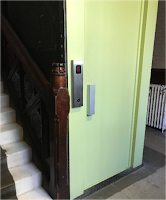
Figure 1. A Department 
Elevator. This photograph 
shows a very narrow entrance
doorway to an elevator.
The elevator is next to a
staircase with an ornate
carved wooden banister.
To illustrate my argument, I am going to start backwards, i.e. from the inside of institutional buildings. Figure 1 is of an elevator - possibly one of the most common environmental adjustments many universities have implemented in their respective buildings. The pictured elevator has purposefully been chosen as an example because of the practicalities that accompany its very presence. Whilst I do not know for certain the original purpose for the installation of this particular elevator, I am going to assume it was in response to policy / legislation surrounding accessibility1.
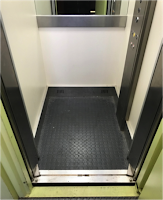
Figure 2. Inside a
Department Elevator. This
photograph shows the inside
of the elevator depicted
in Figure 1. The interior of
the elevator is very small.
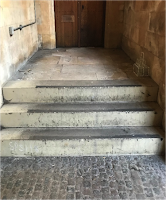
The featured elevator, however, is impractical. An adult wheelchair would struggle to fit inside (see Figure 2), and self-propelled wheelchairs would definitely not fit. Yet, fitting inside the elevator is a secondary issue - first and foremost, individuals with mobility considerations would have to find a way to actually reach the elevator. To reach the featured elevators for example, an individual would have to navigate the steps in Figure 3; there is no alternate entrance and a ramp cannot be fixed to the steps due to the steepness and available space in front of them.
Figure 3. Stairs to Departmental
Building. This photograph
shows 3 steep stone steps
heading up to wooden double
doors.

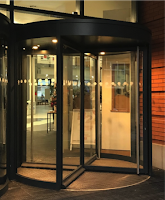
Whilst I recognise that most institutions have more practical elevators, many have less accessible entrances. At a growing number of institutions, revolving doors, as illustrated in Figure 4, are being installed for energy efficiency measures, to prevent draughts. Such doors are not inclusive of individuals with mobility considerations. Having to find and use an alternate entrance is isolating and could even be exclusionary if one does not exist.
As Hannah Gibson so aptly wrote, access to spaces sends a message that ‘certain bodies are more welcome than others … [and] that they are inferior to [more] able-bodied individuals’. With well-known governmental initiatives such as Widening Participation (WP)2, access boundaries should not need to be pushed to make HE more inclusive. In contemporary society, inclusive access should be the norm.
I have never self-identified as ‘dis’abled, mostly because I have never previously been made to feel so. However, having moved to Cambridge, I now recognise that modern structures such as accessible elevators, automatic/light doors, and relatively flat pathways, are luxuries. Needless to say, considering basic access is yet to be conquered, accessible teaching/meeting rooms and mobility-friendly accommodation are even more rare.
Figure 4. A University's revolving
doors. This photograph shows
a revolving door split into
4 narrow sections at the
entrance to a building.
I cannot escape the feeling that had I needed to rely more robustly on others, or been unable to come and go as I pleased without an entourage or timed assistance, I may have identified and felt differently. In this context, I am fortunate that my first experiences of HE were not made to be exclusive, and as a result I was enabled to reach my full potential. Now, in the words of Prof. Sara Ahmed (2006: 62), I am forced to acknowledge that ‘[w]hen bodies take up spaces they are not intended to inhabit, something other than the reproduction of the facts of the matter happens’; entrances inadvertently promote segregation, inaccessible elevators deny individuals with mobility considerations access, and thus boundaries are reinstated.
References:
Ahmed S, (2006). Queer Phenomenology: Orientations, Objects, Others. Duke University Press. USA.
Armstrong C, (2008). What you need to know about widening participation. [online] Available from: http://www.jobs.ac.uk/careers-advice/working-in-higher-education/1146/what-you-need-to-know-about-widening-participation Accessed: 27th August 2018.
Footnotes:
1. see the Equality Act 2010.
2. The aim of WP is to enable and encourage access to HE by offering opportunities to under-represented groups within the general population. Under-represented groups traditionally include which includes people with disabilities (Armstrong, 2008).
About the Author

Portrait photograph of Amarpreet
smiling into the camera with a
cityscape sunset in the background.
Amarpreet Kaur (@lioness1992) is a PhD Student at the University of Cambridge in the Department of Sociology. Amarpreet's research focuses on human germline genome editing in relation to disease and disability.

Saturday, 14 July 2018

What neurodiverse, chronically ill and disabled academics do to manage life in academia

Written by Nicole Brown 
Being chronically ill, neurodiverse, and/or disabled means that adjustments have to be made in life. Quite naturally, the symptoms of illnesses, neurodiversities, and disabilities also affect one’s working life. This is, of course, equally true for academics, although they are often seen to be privileged. The digital health community and advocacy web site The Mighty has recently published a contribution on impolite behavioural strategies that those with chronic illness engage in to protect their health as much as possible.
Many of the behaviour patterns mentioned can be transferred directly or in some modified, translated form to serve as coping strategies for academics. This is exactly what I am doing in the following. Drawing on the original list from The Mighty and on conversations with disabled, ill, and neurodiverse academics, I provide a non-exhaustive list of coping behaviours in academia.
  1. Saying "no"
  2. Institutional citizenship requires academics to take on extra roles and responsibilities such as attending events, getting involved in planning and marking, and representing departments; the tasks are unlimited. Saying “no” is not an easy decision, but in order to protect body and mind “no” becomes an important word and therefore needs to be accepted and respected. Saying “no” does not make academics traitors to their institutions; it actually means the opposite: the academics are loyal to their students and workplace and are trying to make sure they are able to keep up with existing workloads and do not risk burnout.

  3. Rescheduling

  4. Many academics with disabilities, illnesses, or neurodiversities are overwhelmed with the tasks on hand, but they are still very keen to be fully involved in institutional life and decisions. They may just need some extra time or space for that. Rescheduling meetings and conversations is therefore particularly important, for the academics themselves but also for those involved in the decision-making meetings. After all, it is not in the interest of anyone to finalise decisions or documents under the influence of sensory overload, pain, fatigue, exhaustion, or any other symptoms. The flexibility of rescheduling means that the work the academics are contributing will be of a higher standard and the best possible quality. And sometimes, it may just be enough to allow for remote participation via email or video-calling facilities.

  5. Secluding oneself

  6. Many people with chronic illnesses, disabilities, and neurodiversities need their own space and time for themselves to which they can withdraw. For some, this may mean physically removing themselves into a quiet room where stimulants are limited. For others, this may mean resting or even taking a nap. For others still, it may just mean that they do not wish to network or engage in conversations. In a working context like academia, where networking and representation at events are everything, this is obviously very difficult to achieve. Therefore, the onus must be on all of us to create an environment where withdrawing from demanding situations is not seen as rude, but as a different way of working.

  7. Being assertive about needs

  8. This is in line with the previous points. All of us know for ourselves what makes us comfortable and productive and effective. So, therefore, any kind of workplace adjustment needs to be encouraged. This may mean offering a private office rather than an open-plan office – not because those with illnesses, disabilities and neurodiversities want to be treated differently, but because stimulants like noises, smells, lights or the flow of air (air-conditioning, heating, windows) cannot be suitably adjusted for each individual’s needs. Similarly, sunglasses, socks, blankets, pillows, backrests, and footstools are all items that can easily be provided. The message here needs to be that none of these items (or, indeed, any other support gadgets) should be ridiculed or envied. They are means to ensure productivity. Equally, being assertive about one’s needs includes strategies like staying away from work to avoid sick people during flu-season, asking not to be interrupted in order to maintain one’s stream of thoughts, not standing to greet someone, bringing one’s own food and drinks, and so on.

  9. Leaving

  10. Finally, and as important as the previous points, academics may need to leave. This may be leaving early to seclude themselves or to attend a doctor’s appointment, or this may be sick-leave. Many academics with chronic conditions feel under pressure to perform and produce so that they are pushing through acute flare-ups instead of allowing themselves a day or two to heal. In this sense, working models for flexible hours are probably the most feasible, sensible, and effective strategy for both academics and their employers.
For many, this list will include things they do to pace themselves and manage their needs. But for many other academics, this is a list of things they would like to do but feel they cannot. Academia is seen as an environment where there is no space for weakness, vulnerability, or anything less than being fully productive.
I am hoping that with the top-5 items highlighted, it may be possible to raise awareness of and increase empathy for the experiences of academics with illnesses, neurodiversities, and disabilities. Naturally, experiences of illnesses, neurodiversities, and disabilities need to be seen individually, but there are common traits affecting all non-neuro-typicals. And understanding and tolerance are what is needed most, after all.
Recent publications
Brown, N. & Leigh, J. S. (2018). Ableism in academia: Where are the disabled and ill academics? Disability and Society. DOI: 10.1080/09687599.2018.1455627
Brown, N. (2018). Exploring the lived experience of fibromyalgia using creative data collection methods. Cogent Social Sciences. DOI:10.1080/23311886.2018.1447759
Brown, N. (2018). Video-conference interviews: Ethical and methodological concerns in the context of health research. SAGE Research Methods Cases. DOI: 10.4135/9781526441812
Brown, N., Jafferani, A. & Pattharwala, V. (2018). Partnership in teacher education: developing creative methods to deepen students’ reflections. Journal of Educational Innovation, Partnership and Change, 4(1). DOI: 10.21100/jeipc.v4i1.747
Brown, N., & Janssen, R. (2017). Preventing plagiarism and fostering academic integrity: a practical approach. Journal of Perspectives in Applied Academic Practice, 5(3), 102-109. DOI: 10.14297/jpaap.v5i3.245
About the Author
Headshot of Nicole 
Brown in front of 
a plain background

Nicole Brown is a Lecturer in Education at UCL Institute of Education, and a doctoral researcher at the University of Kent. Her research interests relate to ableism, identity and body work, physical and material representations and metaphors, the generation of knowledge, and advancing learning and teaching within higher education. Contact details: nicole.brown@ucl.ac.uk Web site: www.nicole-brown.co.uk Twitter: @ncjbrown @FibroIdentity @AbleismAcademia

Tuesday, 26 June 2018

‘Not What I Paid For’: Ableism, Evaluations and the Academic Life

Written by Aparna Nair 
It was that time of year again.
The semester drew to an end and the university sent us enthusiastic email reminders to get students to evaluate our courses. ‘Evaluate NOW’, screamed the emails and signs posted all over campus. This semester, I caught myself instantly deleting that first notification as well as the later more urgent reminders. It was a futile gesture, since I nonetheless made sure to get my classes to fill in the evaluations. But for the first time in my academic career, I was genuinely anxious about the impending possibility of reading an evaluation report. Admittedly, 2017 was uniquely rough. A stressful year teaching seven courses was complicated by personal losses and the low hum of rising anti-immigrant sentiment, making it one of the most difficult of my life. I spent most of the year in a haze of auras, as my epilepsy had become rather recalcitrant.
And then I got these comments in my student evaluations:
I know she is sick. I know that she needs to sometimes bring her support dog into the class. I get it. But she missed classes. I know her TA took over, and that she caught up when she returned. But that is not what I paid for.
I expect more.

I don't want to hear about her illness. She gets paid to do this. WE are paying her to do this. She just needs to stop talking about it.

Even as I type the words, the shame rolls over me.
Evaluations like these raise the question of how academics who openly lay claim to disabled or chronically ill identities should respond when students demonstrate open, almost casual - certainly deliberate - ableism in evaluations. There is nothing in the faculty handbooks, endless trainings and workshops about being confronted with such blatant ableism.
I have lived with epilepsy for a very long time--I was diagnosed at the age of 11. In the deeply traditional and conservative South Asian cultures where I grew up, difference was neither encouraged nor tolerated and conformity was consistently rewarded. As a result of my illness, I experienced isolation, marginalization, derision, stigma and violence. After nearly two decades of concealment, I made a conscious decision to stop pretending that epilepsy was not a serious part of my life. Why, I thought, should I deny something that impinged on my every waking hour in ways that people rarely comprehended? Why did I need to pretend I was ‘normal’ (which my family had desperately wanted me to be) when I knew how illness marked me as different?
So, I ticked off the ‘Yes, I have a disability’ box when I applied for the position I have now, nervous and uncertain as to whether it made me just too marginal for a deeply conservative public university. I lay open claim to an epileptic identity as being part of the reason for my research agenda on disability studies and disability histories in South Asia. I design and conduct workshops on disability in university settings with a wonderful collaborator, and discuss what it means to be a chronically ill faculty member and how to ensure that our classrooms are accommodating and welcoming to disabled and chronically ill students. I publish autoethnographies on epilepsy in South India.
And every semester, my hands still shake when I tell students that I am epileptic in that first introductory session of every course. I strive for a matter-of-fact tone, and tell the classes that while this is not something I would usually share, there may be some times in the semester that my illness becomes uncontrollable and I might need to cancel a class. I then reassure them that this is factored into their syllabus and semester planning and that they will not lose out in terms of learning. Interestingly enough, my disclosure has consistently impelled students to share their own chronic illnesses or disabilities with me in private and I am very grateful for this, since it means I can make accommodations for them and design the class around their needs as well. But I have also come to realise that my initial fears about this act of public disclosure were not unwarranted.
For most of my teaching life, evaluations have always been the space where students expressed themselves anonymously and openly about their professors, without fear of reprisals. Evaluations can be funny and frivolous; trite and tough. Most of us who teach have been embarrassed at some point or the other by what seems to us sometimes unfair, occasionally inapposite ‘bon mots’—from comments on our sartorial choices (‘I loved his t-shirts’ to ‘He wore the same shoes all semester long’) to condemnations of our general affects (‘She is very opinionated! And expects you to agree with her’) to the student’s pondering what on earth we were doing in our chosen professions (‘I don’t know why he is teaching, clearly he is happier in the lab’). But evaluations can also be serious and help us adapt our teaching styles, our evaluation methods, our reading assignments and other pedagogical choices. I learnt that students liked blogging, but that they did not think that they had enough time to work on their exercises in class. I learnt that students will always have mixed opinions about group work, but that it is nonetheless useful. I learnt how the complicated courses I taught on race and empire and disability were received emotively and intellectually, and those responses were profoundly important in developing my courses in certain directions. So I had accustomed myself to opening my evaluations with the certainty that I would find useful information on my course design and assessments along with the more frivolous comments.
But I am at a loss as to how to respond to the casual ableism in my student evaluations, ableism which will become a part of every job application, every promotion and tenure application. It will be misinterpreted and decontextualised by committees and administrations and will eat into my teaching accomplishments or my research portfolio. For many people who see these comments, my epilepsy will circumscribe my abilities and skills.
How then do we respond to ableism in evaluations? I must admit, I am left only with questions. One option is to mention nothing of epilepsy at all in my classes. But it feels dishonest and just wrong.
So I can tell you how I have learnt to cope. I try to focus on the students with whom I seem to be connecting, the ones whose work is wonderful, who challenge me in class and whose presence in my classes is a true joy. And there are many of them. I have begun conducting my own evaluations in class, asking students what worked and what did not—and these are often more detailed feedback for adapting my pedagogical approach in different classes.
My methods do not always work. I sometimes feel like Sisyphus, and wonder if there is any point. I wonder if the affective (and physical) toll of being ‘out of the closet’ in academia is worth it at all.
And, in the meantime, it is more than a month since my evaluation reports were published. I still have not clicked on the link that takes me to the report.
Maybe next month? Or maybe not.
About the Author

Aparna Nair currently works as Assistant Professor in History of Science at the University of Oklahoma-Norman. She teaches on disability, race, empire, medicine and public health and her research explores colonialism and disability in British India as well as the meanings of chronic illness in modern south India. She blogs at disabilitystories.com.

Sunday, 2 July 2017

Reflections on being awarded tenure as a woman with kids and a disability / chronic illness

Written by Holly Witteman 
We have kindly been given permission to reproduce this from Holly's blog, where you can read the full article.
There is no universal experience. In my individual experience, a good partner can make the ‘with kids’ part much easier but the ‘and a disability / chronic illness’ part remains tough. Support helps, but no one else can ever do the daily, relentless work of keeping myself alive in a world and career that isn’t always well-structured for staying healthy. The things that have worked well for me have been: (1) being flexible geographically, even at a cost to my family, (2) being extra disciplined about working hard whenever I can to balance out the times when I can’t, (3) using a calendar, not a To Do list, for planning my work, (4) writing constantly, and (5) having full drafts of grants ready 6-8 weeks ahead of deadline for rounds of pre-submission review. It also gives me hope for the future of science and research to (6) use my position to work to improve the system so that research and researchers don’t continue to be held back by barriers that have nothing to do with the quality of one’s work. This effort may or may not help me, but I am determined that it will help others. I am glad not to be alone in these efforts, and I invite anyone who isn’t already involved in such efforts to join in. Especially if you are an academic in Canada, please read this book.
In November, my application for tenure and promotion was approved. June 1, my rank went from Assistant Professor (professeure adjointe at my French-speaking institution) to Associate Professor (professeure agrégée), a bigger deal than I ever understood before I became a professor. This means that the university at which I am a professor has more of a commitment to me, and I to it. I will still be reviewed annually and need to continue to work hard, especially if I want to continue doing work that is funded by competitive grants, but this provides a higher level of job security than I had before. It means, essentially, that I cannot be fired without cause.
It has been a long road to get here, and the road doesn’t end here. My colleague Dr. Brian Zikmund-Fisher once told me, “Getting tenure is like winning a pie-eating contest in which the prize is more pie.” I have already found this to be true. But it’s a good time to take stock.
I originally started writing this for myself. I write for myself a lot. It is how I sort through my thoughts. In this case, those thoughts were about how I got here, what has gone well for me that I should keep doing, what has gone less well for me that I should stop doing, and what else I can do to help improve the system. I read something recently that really resonated with me and so I decided to share this post in case any of what I’ve written might be helpful to others, especially any others like me. (Those others will have to be people who can make it through many, many paragraphs. Scroll down towards the bottom if you just want my list of things that have helped me.)
I have two kids and have spent nearly all my life living with type 1 diabetes, a time-consuming autoimmune chronic illness classed as a disability. My kids are 10 and 5 years old. My diabetes is 34 years old. It took me quite a few of those 34 years to identify as disabled, a period of time I now recognize as being marked by my own internalized ableism that took some time to address, a growing awareness of how much I still have to learn about other forms of disability, and fear. When I say internalized ableism, put plainly, I mean that didn’t want to identify as disabled because I saw it as a negative attribute rather than just an attribute. It took me a while to deal with that. My fear comes from being afraid of having my ability to do my work impeded by ableism. I’m having a very successful career so far. I’m thrilled to be able to do research that I hope will help many people. I love doing the work I do. I love solving problems, answering research questions, and being able to support trainees in their paths toward their career goals. I don’t want that to stop for any reason, but I especially don’t want it to stop because people who have power over my career may be prejudiced.
My fears are well-founded. Academia is a competitive, reputation-based business, reputation is determined by people, people shape and are shaped by fundamentally unequal social structures, and many people also have individual biases. Individual biases may be conscious or unconscious, against groups of others or against groups of which we are members. There are many randomized controlled trials and well-analyzed observational studies in which the data support what people from underrepresented groups have long said: when you are a member of one of these groups, you have to be extra good to get an even chance. (For those who are curious, here is an excellent annotated bibliography on gender bias and other biases in academia. I also linked to a number of studies in this editorial and you may also wish to use search engines and academic databases just like you would for any other academic topic.) 
The effects of four such biases in academic research in Canada are most easily apparent in statistics for the Canada Research Chairs program, a prestigious salary award program that was required to set targets for equity after a court settlement. Canada Research Chairs pay whole salaries or portions of salaries of professors and thus, are used as recruiting tools and/or budget line adjustment tools by universities. It’s up to each university to nominate people for the chairs they have been allocated. They may nominate professors already appointed or they may recruit new professors.  
The idea of having these targets is to help ensure that known biases in academia don’t prevent qualified candidates from being nominated. These targets are achievable, not aspirational. They reflect realistic, even low, proportions within the available pool of candidates in academia. All of the targets are well under than the associated proportions in the general population. In Canada, including Indigenous nations, women represent 50% of the population, visible minorities (a Canadian term for people of colour) represent 22%, Indigenous peoples represent 4.6%, and disabled people represent about 14% of the population aged 15 years or older. For context, in the US, 19% of the population have a disability. In Australia the figure is 18%. In France, the statistic is 18%, with 80% of those being invisible. In the UK, 16% of working aged adults are disabled. Countries don’t all have the exact same definitions of disability but it’s clear that in all countries, there are a lot of people who face different kinds of barriers.
The fact that the Canada Research Chairs program isn’t achieving easy targets suggests strongly that the nominations processes as a whole are unfortunately biased, most likely in subtle ways that may be hard to identify in any single decision. This means we, as a group, are likely failing to hire and/or nominate excellent candidates. Data below are from the Canada Research Chairs’ Program Statistics, using their nomenclature. They only report single categories, no combinations. In other words, as Dr. Malinda Smith notes, there is no intersectional presentation. In statistical terms, this is like looking at main effects but not interactions, even though you know that interactions are likely to matter.
Canadian universities have had trouble with all four targets but they failed most spectacularly in nominating disabled people, so much so that the target was lowered. Among the people I know in academia in Canada who advocate for leveling the playing field for everyone, they often bring up issues of sexism, sometimes racism, sometimes colonialism, but rarely ableism. (There are also other dimensions that get less attention in academia; e.g., gender identity, sexual orientation, socio-economic background, and others.)
About the Author

Holly Witteman, PhD, is an Associate Professor in the Department of Family & Emergency Medicine, Université Laval (Laval University), Quebec City, Canada. Quebec City is unceded traditional territory of the Abenaki and Wabenaki Confederacy and the Wolastoqiyik (Maliseet) people. Dr. Witteman directs the research unit within the Faculty of Medicine’s Office of Education and Professional Development. She is also a scientist at the Research Centre of the CHU de Québec-Université Laval, at the new Institute of Primary Care Research affiliated with Laval University, and an Affiliate Investigator at the Ottawa Hospital Research Institute, Ottawa, Canada, unceded traditional Algonquin territory. With an interdisciplinary background in human factors engineering, human-computer interaction, and decision sciences, her research is about the design and evaluation of digital and other media in health decision making. She specializes in human-computer interaction in health education, risk communication and decision making, including design methods to support broad, inclusive user-centredness and patient-centeredness. Her work as Principal Investigator has been funded by the Fonds de recherche du Québec – Santé (FRQS), the Patient-Centered Outcomes Research Institute (PCORI, United States), the Canada Foundation for Innovation (CFI), and the Canadian Institutes of Health Research (CIHR).

Thursday, 18 August 2016

Giving Yourself Permission; especially for invisible illnessess

Written by Sophia Frentz
The most important thing I’ve ever learned how to do is to give myself permission.
If you’re reading this, it’s likely you’re an overachiever, that you’ve pushed yourself to (and past) breaking point multiple times, and that you’re not very good at saying no. I understand; I’m all that and more when it comes to toxic relationships with work. I’m pretty sure the only reason I survived my honours year is that the sound the heaters made at night scared me so I had to go home regularly.

My Coping Mechanism

When it comes to being chronically ill the most important coping mechanism is to give yourself a break. I have had depression for most, if not all, of my life. My anxiety and other brain quirks rear their heads when I push myself too hard. I’m good at ignoring them and getting on with work. I’m also good at getting distracted and forgetting to eat for a week. Neither of these are positive traits. When I gave myself permission (to be sad, to be afraid, to take days off, to take care of myself), a few things happened.

What happened when I cut myself some slack?

I stopped getting so defensive when people asked me about it. I’m constantly afraid of disappointing people in authority, but once I give myself permission to put my health first and told people that, there was very little argument. The people around you often want to be supportive, but can’t take your situation into account until you say “I’m taking today off because otherwise I will lie on the floor and cry instead of doing work”.
Secondly, I got healthier, happier, and more productive. This may seem obvious, but the “don’t do work to do more work overall because you’re not as sick” equation isn’t one I totally get. When I am sad or stressed, my go-to is to throw myself into work and yes, obviously that isn’t healthy or productive, but I liked it. Treating myself the way I would treat a sick partner made me better at research and happier with my life.
I became more confident. The pressures of being a woman in science means we’re not “meant to” have emotions (see: Tim Hunt’s failed “joke”). By giving myself permission to be “feminine” in the sense that I have feelings meant I was being myself a lot more, which made me a more confident researcher. It also meant I wasn’t bottling anything up, so my mental illness let up a lot. It surprised me how much of my anxiety was tied up in the fear of how people would respond to who I was.

Acceptance, Asking for Help and Healing

It also became easier to ask for help - I wasn’t hiding my mental illness any more, or pretending it was a “blessing in disguise” (I went through a few weird stages of relating to my mental health). Rather, I was allowing myself to have it and in the same step letting myself not be superhuman. I still don’t quite get along with the term “disability” but a fully healthy person probably couldn’t do what I push myself to try, so giving myself permission means taking a breath and not getting frustrated with my limitations. This resulted in me both thinking about my mental illness as an illness, and initiated getting on medication, which has been one of the best choices I’ve made.


Giving myself permission was instrumental when healing from trauma. At a recent talk about the barriers women in science face, a panel I was on was asked how we dealt with our personal barriers. I said that I cry a lot.  Allowing myself to cry, be angry, and to experience the full spectrum of human emotion has been invaluable. It has contributed to my growth as a human and as a scientist and has facilitated managing my illness while studying and working. 10/10 would recommend.

About the Author


Sophia Frentz is a PhD student in Genetics at the University of Melbourne with a fun cocktail of mental health issues, predominantly depression. She's learned a lot of lessons along the way but still struggles with giving herself a break.

Illness in the Ivory Tower: Coping with chronic illness in academia

Written by Scott Elias 
I have spent my whole adult life in Academia – the kind of person who just fell in love with university life as an undergraduate, and have stuck around this stimulating environment ever since. Since I began my ungraduated studies in 1972, that makes 44 years, including eight as a student, 20 as a professional researcher, and 16 as a lecturer. My health started to break down in 1986, and I was diagnosed with ulcerative colitis. I had my entire large intestine removed in 1991, which should have dealt with the colitis, except that new inflammation developed in my small intestine, so I was re-diagnosed with Crohn’s disease. I have lived with an ileostomy for 25 years, and the hole in my abdominal wall that this caused has torn, necessitating several parastomal hernia operations (I’m facing another one in a few weeks).
So that’s my tale of woe, in most of its gory details. I thought you needed to know that, so that you could appreciate how I have been able to cope with my problems in an academic setting. 

Much of my research involves field work in remote regions of Alaska. This presents challenges for someone wearing a stoma bag, but I have managed to cope pretty well, all things considered. Ostomy bags have an adhesive to they stick to your skin. In the 1990s, this adhesive material was rather heat-sensitive. I found this out the hard way when I was doing fieldwork on the North Slope of Alaska, about 1000 km from the nearest source of replacement bags. I had foolishly left my stoma supplies in the truck (boot) of a rental car, and they got over-heated on the long, two-day trip north from Fairbanks. I managed to get a few days of fieldwork done, but then ran out of serviceable stoma bags.  I made it back to Fairbanks before the last one leaked. I do not recommend 1000 km of driving on unpaved roads, especially all in one day, but it’s amazing what you can do when you must.
One of the most difficult aspects of fieldwork for me is simply finding the energy to carry out the necessary tasks. Crohn’s is an auto-immune disease, and it drains the body of energy, especially during flare-ups of the disease. When this happens, you simply have to take care of yourself: get extra rest, shorten the work day, and ‘look out for number one.’  I have a colleague with whom I share another auto-immune disease – ankylosing spondylitis. He has had to learn the hard way that when he pushes himself doing fieldwork as he used to do before he got AS, he just crashes - sometimes ending up in a hospital. I sympathize, because field work is very intellectually stimulating. It scratches a deep itch for Quaternary scientists, who like to dig through dirt, find precious samples, and bag them up for transport back to the laboratory. But, in the end, I have had to learn to delegate much of this to postgraduate students. I direct where they dig and where they take the samples, while I take pictures and write sample bag labels.
Work at the university is much easier to deal with. My biggest hiatus from teaching came last academic year, when the surgical incision from a parastomal hernia repair in January (2015) just refused to heal properly, and kept getting infected. I managed to teach nearly all of my third-year course last spring, although sometimes this meant getting out of bed, getting dressed, my wife taking me to the college where I delivered a one-hour lecture and went straight home to bed again. All credit goes to my departmental colleagues who took on extra teaching for me, and to my head of department, who did a great job of juggling things around to make it all work.

I think the key to making such things work is open, honest communication. When I am having difficulties fulfilling my duties because of my medical conditions, I talk to the people who will be affected by it.  I have dealt with six different heads of department during my career at Royal Holloway, and they have all been sympathetic and helpful. I used to lead an undergraduate field trip for physical geography students. This is a physically demanding week-long job. I was able to cope with the stresses back in the early 2000s, but I cannot cope at that level any more. Again, my head of department found a less demanding role for me: academic coordinator of a local field trip that is run by a colleague. So there are ways around obstacles such as these, but the key is advanced planning and lots of communication. When I first had the ileostomy, I read a book entitled ‘Never Apologize, Always Explain’ by Patricia Stout Skilken. The book’s title explains her philosophy about having an ileostomy.  I believe she has the right idea, because when I have explained my situation to colleagues, we have found solutions to the problems. I encourage everyone in Academia who has a chronic illness to be open and honest about it. Believe  me, it works much better that way!

About the Author

Scott Elias is a Professor of Quaternary science at Royal Holloway, University of London. His main research interest lies in the reconstruction of past environments, using insect fossil evidence.

Live in the Now - Some Strategies to Tackle Academia with Chron's Disease

Written by Katharina Spiel 
I am an overachiever and have Chron's. Both things that are more or less affecting my life. I love to be in academia and back in 2008 I started my second bachelor already with the goal of being in academia as long as possible.  My first really bad episode of Chron's came in 2009. I struggled managing class attendance and basically fell back by a year at some point. However, I learnt to deal with things my way and am now on the path to a PhD even if it is an even rockier path than I thought it would be. Here, I share some strategies that seemed to work for me. They are in no way complete and are partly intertwined with other conditions that I deal with in different ways.  You'll find some tips that might or might not work for you and might or might not work for certain conditions. I'm happy to learn more about others' approaches and what they have learned as well, so please do contact me at katta@chronicallyacademic.org.

Be radically open about it - if you can

A first principle that I have established with my Chron's is that I'm radically open about it. That means whenever someone is asking what is up, I'm explaining that I'm in an episode and what that means. For some people, that is hard to take in.  Let's face it, there's some 'yuck factor' when you hear about it the first time and there is a taboo about bodily functions in middle European societies. It's also worth it for me every time someone tells me "I just got diagnosed with an inflammatory bowel disease and knowing that you have it to helped me come to grips with it and tell at least someone about it", or even just "having heard you talk about your ileostomy made it possible to bring up the issue with my grandfather and make sure he knows that there is someone to talk to". Being radically open about it is my contribution to a normalising it, because when I can say that I'm having an episode and people know its connected to many bathroom trips and an overall exhaustion, I get personally more of an understanding, but in the end others don't have to go through explaining what it means.  That approach is kind of difficult to do though, because people can't help their initial yuck reactions when you first tell them. So it's not for everyone (and shouldn't be expected from everyone).

Negotiate the possibility for distance work from home

I made sure that - even though that is technically intended for parents - I could work from home at least partly when I have episodes.  My contract now allows that I can flexibly stay at home and work from there (if my direct boss agrees, which they always do, to my luck).  However, that also means that I structure my tasks constantly on whether I can do that in the home or whether it requires access to office resources. And I always try to have some tasks on my "can be done from home" list.  There is also a set of essential books or papers, that I drag around and change on a weekly basis, so that when I, for example, write papers, I can do so at either place.  Being that organised allows me to relax and judge without work stress whether I have enough spoons to go to work, enough to work from home or should call in sick.  That extra option in-between is perfect for me as a large amount of sick days also stresses me tremendously.

Have hobbies outside of academia

 On the other hand, what helps me a lot is having hobbies.  Some of them are active (like Roller Derby), so they are really only an option outside of episodes, when I have enough energy.  I have found though that sport helps me be relaxed more in general and made me watch my food with more purpose, which combined leads to fewer episodes. This is sometimes not an option and I'm aware that I am privileged in that I can do this now.  There have been times when I couldn't pick up a sport at all because episodes were coming in such quick succession.  Another hobby of mine doesn't require me to be active or alert, but rather just occupies me; crafting and in there mostly knitting, so I'll concentrate on that.  The great thing about knitting is that these days I can mostly do it without paying too much attention, especially with large but not very involved projects. These get mostly done during my sick days. But when I come out of an episode and see that I got a bunch of centimetres made of my skirt, I at least feel like it wasn't a complete waste of time even though I didn't have the wherewithal to go to work or do anything cognitively challenging because I was so exhausted. 

Keep your goals in sight

Now, I don't want to claim that it doesn't suck royally from time to time, when there is this conference you wanted to go to and you can't on short notice, causing stress for you and a replacement and making everything worse in the meanwhile.  However, I try to take these set backs and acknowledge them. By that I mean I realise they are there, evaluate their impact and reassess the next steps towards my goal.  For example, if I wanted to attend a conference, because of the community and exposure, I assess whether another conference could do that as well and/or when the next conference is coming up and how my time schedule has to change to accommodate this. That way, I never loose sight of my goal because of obstacles in-between.

The Importance of Support

Written by Hazel 
I was asked to write about coping strategies that I have used as a PhD student with a chronic illness.  I have had mixed experiences as someone who was diagnosed at the beginning of my 3rd year, which made my funding situation complicated but also left me struggling to adjust to my abilities being different.
  1. Accept the support that is available

    I disclosed to the Disability Service and my Department as soon as I had a diagnosis.  At my university in the UK you can disclose confidentially to the Disability Service if you do not want your Department to be made aware of your disability but in my case it was obvious I was ill so I decided it was to my advantage to make my supervisor aware of my condition.  I met with a disability advisor at my university who explained the sort of support available.  I had to provide a letter from my GP stating my diagnosis so that a needs assessment could be carried out at the local assessment centre.  The assessor was really kind and helpful and asked about how my disability affected my work and what help I needed.  At this point, despite being diagnosed with a chronic illness, I thought I would bounce back in a few months so I was reluctant to accept much help.  Several months later when I was really struggling I had to email my assessor and ask for further support which she approved and the university put in place. 
    My first coping strategy as a PhD student is to disclose to the Disability Service at your university and accept the support that is available to you.  For me that included daily taxis back to my house and a printer to allow me to work from home on the particularly bad days.  I was fortunate that a time came when my symptoms lessened and I could walk far enough to use public transport but if my health deteriorates in the future I wouldn’t hesitate to ask for further support.
  2. Find someone to talk to from within academia

    As part of my support package I got weekly mentoring with a specialist disability mentor at my university.  My mentor works with students with a wide range of conditions and from different disciplines.  She has helped me decide how to approach various issues with my supervisor and develop the skills to be productive in a short amount of time.  I suspect I would have quit my PhD without her support.
    My second coping strategy is to find someone you can talk to who understands disability and academia.  Maybe your university has a specialist disability mentor but if not I would suggest approaching the staff disability network or staff equality office and asking if they can connect you up with a mentor.
  3. Be clear and concise about adjustments

    Around 6 months after I got ill I asked to be referred to Occupational Health.  Many companies have an Occupational Health group who are responsible for everything from Display Screen Equipment assessments (i.e. making sure you are sitting properly at your desk) to ensuring staff travelling abroad get the right immunisations.  They will usually have a specialist GP whose job it is to report on the reasonable adjustments needed by staff in order to carry out their job.  Having a report from Occupational Health sent directly to my supervisor made it clear to him what I needed from the Department.
    My third coping strategy is to learn to be clear and concise about your needs.  You don’t need to disclose the exact nature of your disability every time, for example, that you book on to a course even though in my experience people will ask.  You are the expert on the adjustments you need not them so focus on politely stating your needs and don’t get drawn into justifying yourself.
  4. Hold on to your support network

    This might seem like a glib thing to say as I understand that some people find personal relationships difficult at the best of times but it is important.  When I had to reduce my working hours because of my health it was tempting to cut out everything else so that I could focus all of the energy that I had on my studies.  In reality you don’t get a PhD without making some sacrifices so my social life is a fraction of what it used to be but I have kept weekends as my own with one day for rest and laundry and one day for socialising.  The friends worth holding on to have adapted to my need to go out for lunch rather than dinner.  They understand that I can’t walk far or stand around in the cold for ages and that I might need a lie down after travelling to their house.  This small amount of balance between getting enough work done to succeed and socialising in order to be a functioning human being has kept me going through the worse periods of illness knowing that when the latest infection passes there are people who will be pleased to see me on my terms.  It also helps to stop me from being impulsive when I’m feeling isolated and bored which generally leads to doing far too much and feeling far too ill to work for several days.  Skype and FaceTime are also a great way of connecting with family and friends when you don’t have the energy to leave the house.
    My final coping mechanism is to regularly make time for socialising, or whatever it is that you find makes you happy and helps you process your thoughts and feelings.
 About the Author
Hazel believes that academia should become more diverse and that the institutions funding research need to review how they support individuals with disabilities and chronic illnesses who have the skills to become great researchers but who need reasonable adjustments and flexibility to achieve that goal.  Hazel became part of Chronically Academic to raise the profile of this community with a view to campaigning for changes to the culture in academia and the funding opportunities available.